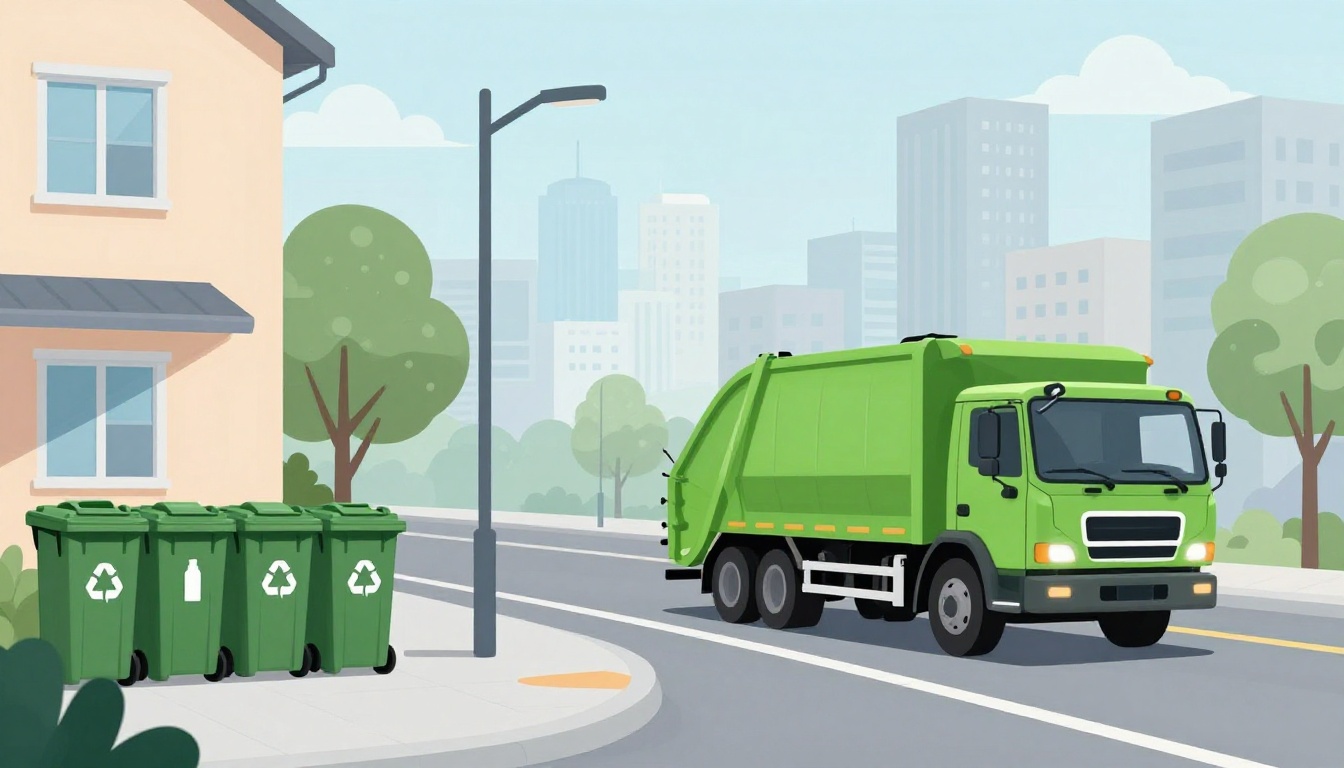
Every week, US homes toss out enough recyclables to fill 80 to 100 NFL stadiums. That’s a lot of material headed for landfills, even when recycling carts exist nearby. The good news? How recyclable waste is collected from homes and cities starts with what you do at home, then flows into city rules, trucks, and processing plants.
When you sort well, you reduce contamination. That means fewer “dirty” loads, lower costs, and cleaner material for making new products. Cities also keep improving pickup systems and resident reminders.
Ready to master your curb routine?
Sorting Your Recyclables Right Before They Hit the Curb
Think of recycling like a kitchen. If you prep the ingredients wrong, the whole meal goes off. On pickup day, your materials need to be clean, dry, and loose (not bagged).
Most cities use a cart-based curbside program. In 2026, many places still follow a simple pattern: paper and cardboard together, and bottles and cans together. Some accept mixed recyclables in one cart, but the prep rules stay similar.
Start by doing a quick “food check.” If an item has sauce, grease, or unknown gunk, it usually can’t be saved. Next, rinse items that held liquids. A quick swish is often enough. Then empty the box, carton, or bottle completely.
Flatten cardboard so it fits and doesn’t blow away. Also keep plastics out of plastic bags. Loose items roll into the right mix at the truck, while bags wrap machinery and slow sorting.
Here’s the basic prep routine that works almost everywhere:
- Rinse bottles and cans (especially anything with drink residue)
- Empty cartons and containers
- Dry items when possible
- Flatten boxes, pizza boxes, and shipping cartons
- Keep items loose in the cart (no trash bag liners)
Now, the reality check: accepted items change by city. Still, many programs accept similar categories: paper, cardboard, glass bottles and jars, metal cans, and common plastics. For example, San Antonio spells out clear curbside rules like “no bags ever” and “recyclables must be clean” on its city page. Use that as a reminder to look up your own local “What Goes Where” guide. The goal is simple: fewer wrong items in the cart means higher recycling success rates.

City websites also explain why they’re strict. When people toss in dirty paper or food-soaked items, contamination rises. That can push good material into the trash stream. It’s frustrating, but it’s also preventable.
If you want one mental shortcut, use this: “If it smells like dinner, it belongs in trash.”
For a local example of what “clean” means in practice, see San Antonio’s curbside collection guidance here: Curbside Recycling Collection – City of San Antonio.
Top Items That Always Make the Cut
Some items recycle well because they’re widely processed and easy to sort. Below are common wins you can usually feel confident about, as long as they’re clean and empty.
- Plastic bottles (often PET #1, plus other common bottle types): clear shape, easy to sort
- Glass bottles and jars: heavy material that stays valuable when clean
- Aluminum and tin cans: metals usually recover at high rates
- Newspapers and office paper: fibers can be reused when dry and not food-soiled
- Cardboard and cartons: flatten them and keep grease off for better handling
Even then, rules vary. A labeled “coated paper” item might be accepted in one city and rejected in another. So, rinse when in doubt, and check your city’s list when something seems unusual.
Sneaky Mistakes That Ruin a Whole Load
Recycling contamination doesn’t come from one bad actor. It happens in small moments, like when you’re carrying groceries in and forget your bin rules.
Here are the most common “oops” items that can wreck an entire truckload:
- Putting recyclables in plastic bags: the bag traps other items and confuses sorting
- Tossing in soiled paper: grease soaks fibers and can ruin batches
- Mixing trash with recycling: diapers, food scraps, and wrappers add extra cleanup
- Throwing in hoses of “wishcycling”: plastic bags, Styrofoam, and foam often do not process the same way
Why does it matter so much? Because trucks don’t just “collect.” They deliver loads to a MRF (materials recovery facility). At the MRF, workers and machines pull items apart. When contamination rises, more material gets rejected. Then even clean items can end up in the wrong pile, because the load is already compromised.
The fixes are easier than most people think. Keep recyclables loose, not bagged. Read local labels on plastics. If something looks greasy, treat it like trash. And when your city has an app or reminder tool, use it on pickup weeks.
One simple habit makes a big difference: keep a small “recycle clean-up” spot by the sink. When you empty a container, you rinse it right away. That reduces the chance you forget later.
Curbside Pickup: The Go-To for Single-Family Homes
For many US neighborhoods, curbside pickup is the default system. A city provides carts, residents set them out by a cutoff time, and trucks collect them on a set schedule.
Most carts are 48 to 96 gallons, often color-coded. Many cities use weekly or every-other-week service. You’ll also see time windows like early morning pickups, sometimes between 6am and 7pm. The city usually sets a “set-out” rule. Some require you to place your cart out the night before. Others say the morning of, by a specific hour.
Then comes placement. Think “easy for the truck, safe for drivers.” Put the cart about 5 feet from the road, away from cars, mailboxes, and fences. Don’t block sidewalks or driveways. After the truck finishes, pull the cart back to your property.
If you miss a pickup, don’t assume it’s the end of the week. Many cities have a process for missed services. In practice, you often report it through a form or city request line after the pickup day, sometimes after late afternoon.
Howard County, for example, states that it provides weekly curbside recycling collection and also repeats the no plastic bags rule. It’s a good example of how cities combine schedule info with clear set-out expectations. You can review the official details here: Recycling Collection | Howard County.
Here’s a simple curbside checklist you can reuse:
- Sort and rinse the recyclables
- Place loose items in the recycling cart
- Flatten cardboard and keep it dry
- Set out on time (night before or morning of, per your city)
- Place the cart correctly (clear area near the curb)
- Bring it back after pickup
If you follow those steps, your material is more likely to stay clean through collection and handling. That’s what keeps recycling working.
Your Cart Setup and Perfect Placement
Carts are heavy tools for one reason: they keep waste contained. Before you set anything out, check your cart number and labeling rules if your city uses them. Some places want your address visible in case a cart gets moved or stolen.
On placement, picture the truck’s arm grabbing the handle. If your cart is too close to a car or mailbox, the arm may hit something. If it’s too far from the curb, a worker might have to adjust it. Either way, collection gets slower and more error-prone.
After pickup, wheels and lids can get damaged. So bring the cart in. Then note any issues, like a cracked lid that could tip during rain.
Small setup wins add up:
- Keep the lid closed unless your city says otherwise
- Don’t overfill past the rim
- Leave space so the arm can lift safely
- Return the cart to avoid tickets or blocked paths
Schedules, Delays, and What to Do If Missed
Pickup days don’t always run like clockwork. Weather, traffic, and crew limits can cause delays.
When a storm hits, cities may shift routes. Often, you’ll see an update on the city’s website or through a service alert. Still, the simplest action is to know your schedule source. Look it up once, save it, and use it every time.
If your pickup is missed, you usually need to report it. Many cities accept requests through an online form or a customer service page. Virginia Beach, for instance, provides a clear starting point for curbside recycling info and customer help here: Curbside Recycling Information | City of Virginia Beach.
Also remember this practical tip: take a photo of your set-out cart after you place it out. It helps if you need to confirm your location or timing.
And yes, delays happen. The difference is what you do next. If you report promptly, the city can adjust the route for your area or schedule a follow-up pickup.
How Apartments and Urban Spots Make It Work
Recycling works differently in apartments because space is shared. Instead of personal curbside bins, you usually get common-area containers, a shared closet, or a compact set of dumpsters.
Some townhomes may still get curbside service. In dense city neighborhoods, though, buildings often use private haulers. That means the building manager, not the individual renter, controls the pickup system.
Even when bins are available, access isn’t the hard part. Coordination is. Wind can scatter lightweight items. People may toss trash into the wrong chute. If residents ignore cleaning up spilled paper, the area becomes unusable fast.
That’s why many multifamily programs focus on management guides. For example, the Recycling Partnership published a multifamily recycling guide that highlights common roles in shared spaces and practical tools for improving participation. It’s a useful way to understand what building staff and residents do together: Guide to Multifamily Recycling (PDF).

In tight neighborhoods, residents also rely on drop-off centers. These sites can handle extra items like bulky cardboard or items that don’t fit daily bins. Hours vary, but they often open weekdays and Saturdays during set windows.
The bottom line for apartments is this: recycling is still a home habit, just with shared responsibility.
Navigating Shared Bins in Your Building
Shared bins need clear rules. Usually, you should sort into the right bin, not “dump everything and let workers sort later.” Also clean up messes if you see items overflowing or paper stuck to the ground.
Because spaces are shared, the building can set policies like:
- Where residents place bins after emptying
- Which items are accepted in each container
- When pickups happen (often managed by a contract)
If your building has a common recycling area, treat it like a shared kitchen. Keep it tidy, and you make it easier for everyone to recycle correctly.
When to Use Drop-Off Centers Nearby
Sometimes your cart can’t handle everything. That’s where drop-off centers help. Many accept bulkier cardboard, extra recycling beyond curbside limits, and sometimes electronics through special programs.
Drop-off centers often have:
- Clear hours (often weekdays and some Saturdays)
- Specific item lists
- Rules for trailers and large loads
If you’re saving a stack of flattened boxes from a move, drop-off sites can be the easiest path. You avoid overflow problems in shared bins. You also reduce the chance that items end up as trash.
If you’re not sure what a center accepts, check the city’s list before you bring items.
Trucks, Routes, and Smart Tools in Action
Once recyclables leave your driveway or your building area, the collection system kicks into gear. Trucks run address-based routes. That schedule reduces missed pickups and keeps workers efficient.
Drivers usually start early. They finish late. Then they return to a transfer point or processing facility schedule. Weather can slow routes, because trucks must drive carefully near parked cars and pedestrians.
In many areas, the city contracts with haulers. Each hauler follows set route plans and service levels. That’s why delays often come with official updates. The city needs to keep service predictable.
In 2026, there’s also more focus on reducing contamination. Some cities run “recycle right” campaigns. Others tighten bag rules or add clearer labels on cart programs. These changes try to protect the MRF process from dirty inputs.
Colorado’s 2026 shift is one example of how state policy can reshape recycling access. Colorado approved a new statewide recycling plan, designed to move recycling costs away from residents and toward packaging producers. You can see the state’s announcement here: New statewide recycling plan paves the way.

Following the Truck’s Daily Path
Routes are built around time and distance. That’s why set-out timing matters. If you put your cart out too late, you might miss that pass.
Also, routes can change for:
- rain and flooding
- road repairs
- holiday schedules
- unexpected equipment issues
When that happens, your best move is to check the city’s collection alerts. If you don’t, you might keep waiting while the truck finishes the area.
Apps That Make Checking Easy
Smart tools help you stay on track without calling customer service every week.
Many cities use apps or web pages where you can enter your address and see:
- collection day schedules
- item rules
- service alerts
- missed pickup requests
For instance, Seattle Public Utilities offers the Recycle It app, which lets customers find collection days and get recycling info. You can use it to reduce guessing here: Recycle It App – Utilities – Seattle.gov.
In other cities, the same role is covered by a city “trash day” page. Boston, for example, has a schedule search and day-by-day info page. Tools like these make it easier to follow the right rules for your specific address. When you use them, you catch changes before they surprise you.
A small tip helps too: label your recycling cart with your street number if your city allows it. If the cart gets set at the wrong curb, it’s easier to fix quickly.
Conclusion
Recyclables don’t “magically” get picked up on their own. Your part starts with sorting clean, rinsing smart, and keeping items loose. From there, curbside set-out rules and shared building systems decide how smoothly collection runs.
After that, trucks follow planned routes, then deliver material for sorting and processing. When you use the local tools and follow your city’s “What Goes Where” guide, you cut contamination and boost results.
Ready to master your curb routine? Check your city rules today, and keep doing the simple steps that keep recycling moving. Your bin helps build a greener 2026.