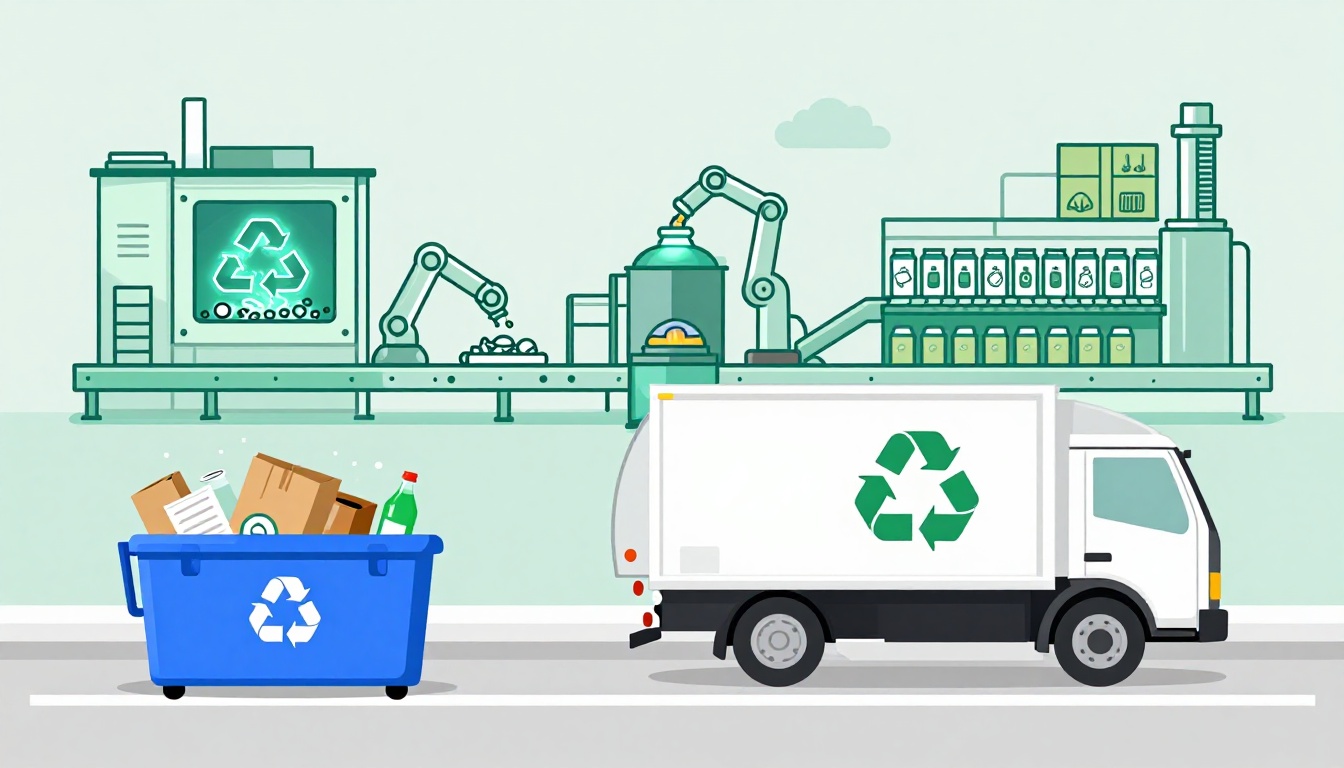
Did you know making aluminum from scratch uses about 95% more energy than making it from recycled cans? That’s one reason recycling matters in 2026, as cities and facilities add AI sorters and smarter collection tools.
Most recycling today runs through municipal systems. Cities set the rules, collect materials, and send them to processing plants. Then, manufacturers turn the sorted outputs into new products.
The process sounds simple, but it’s really a chain reaction. If one link breaks, the whole batch can get downgraded or sent to landfill. Here’s how it works, from your curb to something you can use again.
How Your Neighborhood Collection Starts the Journey
Recycling starts at home, and it usually starts with sorting. You put items into the right bin, based on your city’s rules. Those rules vary because local facilities can only process certain materials well.
Think about a typical week. On a blue bin pickup day, you might set out paper and cardboard, plus bottles and jars. Metals often go in the same stream as other containers. Glass might go separately, or it might be handled with other items, depending on the program.
Next comes the pickup route. Many trucks run optimized schedules, and some use GPS to plan faster stops. Meanwhile, some cities use solar-powered compactors or route systems that reduce stops. The goal is simple: collect only when bins actually need it, and move waste with fewer miles.
Smart bins can help with that. Some models detect when bins are full, and they can flag likely contamination. Others notify crews when a pickup can wait. For example, sensor-based systems can cut overflow and reduce trips, because trucks no longer follow “every route every day” habits.
Here’s a mental picture: your neighborhood is like a relay race. Your curb is the handoff point. The truck is the runner. The processing plant is the finish line where everything gets separated into usable grades.
In some cities, the collection system is even more automated. Certain areas use pneumatic pipes, which move trash through underground tubes. That design cuts some truck traffic and can reduce fuel use, especially in dense downtown zones.
Before the truck takes anything away, you also need to avoid “oops items.” If you mix in the wrong stuff, recyclers may not be able to recover usable material later. Keep these out when you can:
- Food or liquids that soak packaging
- Greasy paper (pizza boxes, takeout wrappers)
- Bags and film plastics (unless your local program explicitly accepts them)
- Batteries, hoses, and electronics (often go to special drop-offs)
If you want a baseline for how curbside programs typically work, check the EPA’s overview of the U.S. recycling system. It’s a good “big picture” anchor before you zoom in on the plant side.
Smart Tech Making Pickups Smarter and Greener
In 2026, more collection tools use sensors and routing software. Some track bin fill levels so trucks arrive only when needed. Others detect contamination signals at the curb, which helps keep bad material from reaching the sorting floor.
So what changes on the city side? Fewer wasted trips. Less spilled overflow. Lower wear on trucks. Also, cleaner incoming loads mean higher recovery at the next step.
Solar-powered compactors matter here, too. They squeeze waste into less space, so one pickup can carry more material. As a result, the system can hold more while still keeping the route efficient.
In other words, smart collection tech is like packing lunch for a road trip. You still bring the same food, but you pack it better. Then the trip uses less fuel, because you don’t have to drive back as often.
As a quick example, imagine a street where every bin gets picked up on the same schedule. With sensors, the route can skip bins that are half-full. That one change can reduce trips across an entire city.
From Trucks to the Big Sorting Plant
Once the truck leaves your neighborhood, it’s on its way to a Materials Recovery Facility (MRF). This is the hub where recyclables become “recyclable” in a practical way. It’s where sorting turns messy mixed loads into market-ready streams.
Before materials enter the main floor, loads usually get weighed. Then the truck dumps onto a tipping floor. That part is quick, almost like a controlled spill. The goal is to clear the truck fast so the plant can keep running.
From there, the work starts immediately. Conveyors pull material in, and systems begin separating it into categories. Diapers, clothing, and other non-recyclables often show up in those loads, so the MRF has to remove them early.
To understand what happens inside a modern MRF, it helps to see the equipment as a set of tools working together. A good reference is a practical guide on how MRFs work. It breaks down the way sortation equipment and material streams connect.
Here’s the key theme: clean drop-offs help everything after. If you bag wet cardboard or toss in food-soaked paper, the plant has to spend more time dealing with it. The output might also lose quality, which affects what manufacturers will pay.
Also, remember this timing reality. MRFs run like factories. They process tons of material every day. If one stream gets contaminated, that can ripple across multiple bales.

The Sorting Magic: Screens, Magnets, and AI Robots at Work
The sorting phase is where the “recycling system” becomes real. Material moves fast on conveyors, and equipment separates items based on size, weight, and other traits.
Picture a busy sorting floor. Material enters. It spreads out. Then it gets filtered into cleaner and cleaner groups.
Most MRFs use a few classic methods in combination:
- Screens and trommels shake out smaller pieces and separate by size.
- Air classifiers blow lighter items away (like paper) while heavier items fall into their lanes (like glass or metal).
- Magnets grab iron-based metals.
- Eddy currents push non-ferrous metals aside (like aluminum and copper), because they don’t behave like steel.
In 2026, AI systems make this faster. Cameras scan items while they ride the belt. Robots or automated arms can pick items at high speed. AI can also learn patterns over time, improving accuracy and reducing “misses.”
For example, a camera system can spot a clear plastic bottle among mixed plastics. Then a robot arm can grab that bottle and send it to the right bin. Meanwhile, screens and air jets keep paper and containers from mixing too badly.
However, even good tech can’t fix contamination fully. Greasy boxes, food residue, and wrong plastics can still ruin a batch. That’s why education and clear local rules matter so much.
Also, some plants run washing steps when needed. Dirt and residue can lower quality. So cleaning helps the next step, where materials get compressed and sold.
Why AI Robots Are Game-Changers in 2026
AI robots reduce the guesswork on a sorting line. They can detect items faster than humans and keep the belt moving without slowing down.
Recent industry reporting points to improvements like higher accuracy and faster pickup rates compared to older systems. Also, robots can run for long hours with consistent performance.
That matters because contamination costs money. If the system mis-sorts a stream, it affects what recyclers can sell later.
Here’s a clear example. A facility might need a high-purity stream of PET bottles for one buyer. If food-soiled packaging mixes in, the PET bale could get downgraded. AI helps reduce that risk by sorting more precisely, more often.
Cleaning and Baling: Getting Ready for Factories
After sorting, recyclables usually move to cleaning and preparation. Washing off labels and grime is common for certain streams. It’s not glamorous work, but it makes the material more stable.
Then comes baling. Baling compresses sorted materials into big blocks. That makes shipping easier. It also makes handling safer for workers.
Think of it like packing moving boxes. Loose items can spill and degrade. But compressed bales keep the material grouped, so factories know what they’re buying.
At this stage, the recycling system shifts from “separating” to “preparing for manufacturing.” The output becomes a supply chain item, not just trash with new hopes.
Breaking Down Tough Plastics and Heading to Manufacturing
Not every material behaves nicely under standard recycling. Some plastics resist melting together. Some films and mixes don’t make a strong product after mechanical recycling.
That’s where advanced processing comes in. In many places, bales get sent to mills and manufacturers. Paper becomes boxes. Metals become cans or parts. Glass becomes jars or new containers.
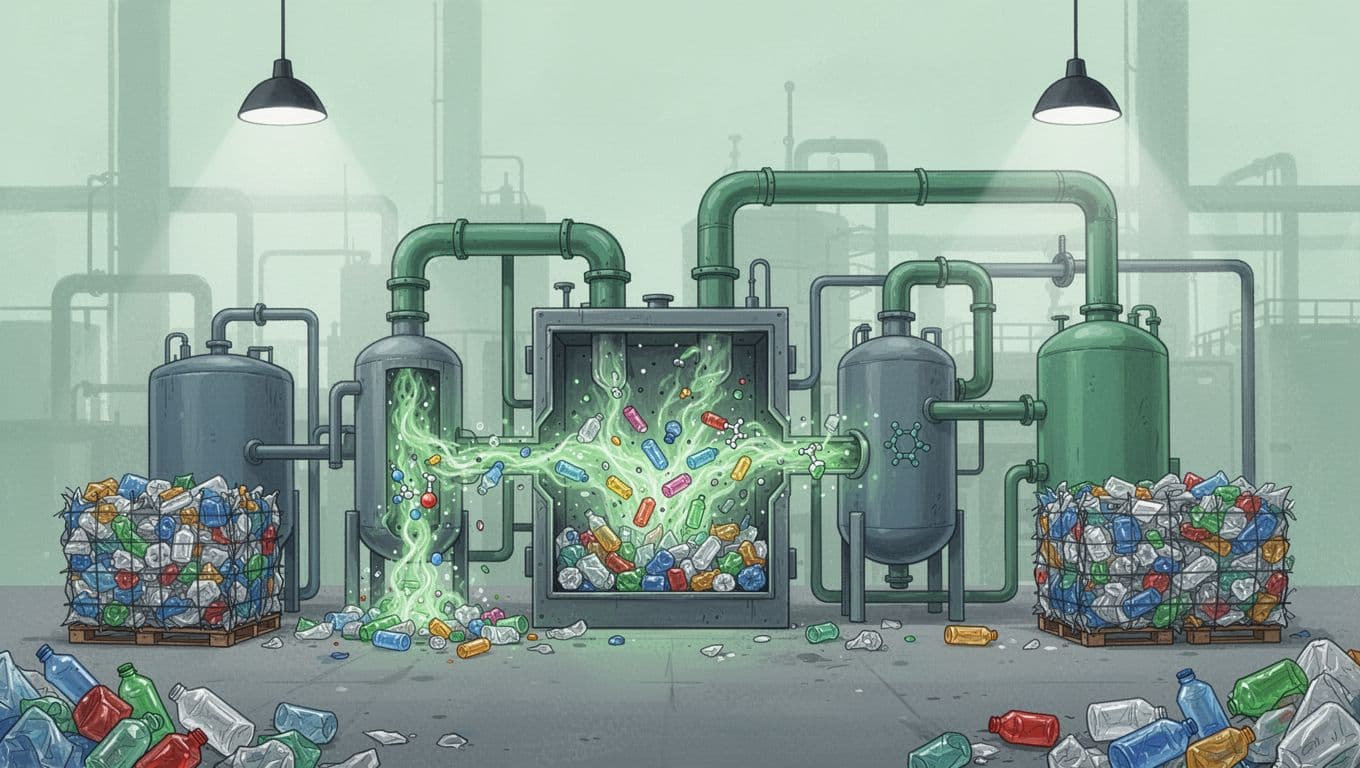
Plastics, especially mixed ones, sometimes follow a different path. Instead of melting everything into one new plastic, some facilities use chemical recycling. This process breaks plastic down into basic building blocks. Then those building blocks can be used to make new plastics.
In the U.S., advanced recycling also connects to policy and incentives. For example, Extended Producer Responsibility (EPR) rules push packaging producers to help fund recycling. That can mean more investment in the systems that handle hard-to-recycle materials.
So how do those bales become real products? Bales ship to processing partners, where each stream turns into a specific feedstock. Then manufacturers shape, cut, and mold the material into new items.
If you’re curious about how chemical recycling targets mixed plastics, see chemical recycling breakthroughs for mixed plastics. It gives helpful context for why this step exists and what kinds of plastics it can address.
Chemical Recycling: The Fix for Mixed Plastics
Chemical recycling works like a controlled “reset.” Instead of shredding and melting, it uses heat, chemical reactions, or catalysts to change plastic into simpler outputs.
For mixed plastics and hard-to-recycle films, this can be the practical solution. Some chemical pathways aim to produce top-grade feedstock that can return to new production.
The scale is still growing, but the trend is clear. As more capacity comes online, chemical recycling adds options when mechanical recycling hits a wall.
Also, chemical recycling can reduce pressure on single-material streams. Instead of rejecting complex plastics, systems can convert them into something usable again.
Closing the Loop: Buying Recycled Goods and Tackling Hurdles
Recycling doesn’t finish when your truck drives away. The last step is demand. If buyers want recycled output, recycling systems can keep investing and improving.
That demand shows up in retail and everyday products. Stores sell items made from recycled plastic. Parks use recycled material for benches and posts. Cash-for-bottle programs reward people for returning containers.
In some areas, programs also encourage better recovery. Bottle incentives can raise collection rates because people have a reason to return containers instead of throwing them away.
Still, challenges remain. One big hurdle is contamination. Many reports show that a portion of collected materials can’t be recovered due to poor sorting. Also, recycling markets can change price, so bales don’t always sell at the same value.
Costs matter, too. Collection, sorting, cleaning, and shipping all take money. When markets soften, programs sometimes cut back or adjust what they accept.
This is where EPR can help. Under EPR, companies that sell packaged goods often share responsibility for the end-of-life costs. In practice, it can mean funding for local recycling programs and education.
In 2026, EPR is also spreading. You can track packaging policy shifts in updates like Packaging Policy Roundup from Sustainable Packaging Coalition. It’s a useful snapshot of what’s changing across states.
Meanwhile, another trend is reducing waste before it becomes recycling. Refill stations for drinks and detergents can cut down on packaging needs. That saves energy because it avoids turning fresh materials into waste in the first place.
Finally, it helps to remember the big national picture. The latest confirmed EPA baseline often cited for the U.S. is around 32% recovery through recycling and composting, with goals to reach higher levels. In other words, progress is real, but there’s still work to do.
The most direct thing you can control is your sorting. When you follow local rules, you protect the stream quality. That makes the plant output stronger. Then manufacturers can count on a steady supply of recycled materials.
Conclusion: Your Small Habits Move the Whole System
Recycling systems work because each step supports the next one. Collection turns your bins into feedstock. The MRF sorts it into clean categories. Then factories transform those outputs into new products.
The strongest takeaway is simple: sort right. Avoid contamination, follow your local rules, and use accepted items only. If your city offers smart bins or pickup alerts, take advantage of them.
Also, make demand count. Buy products made with recycled content when you can. Then the loop stays closed, and the whole system gets stronger for the next round.
So, what’s one item you throw away today that your local program might actually accept tomorrow?