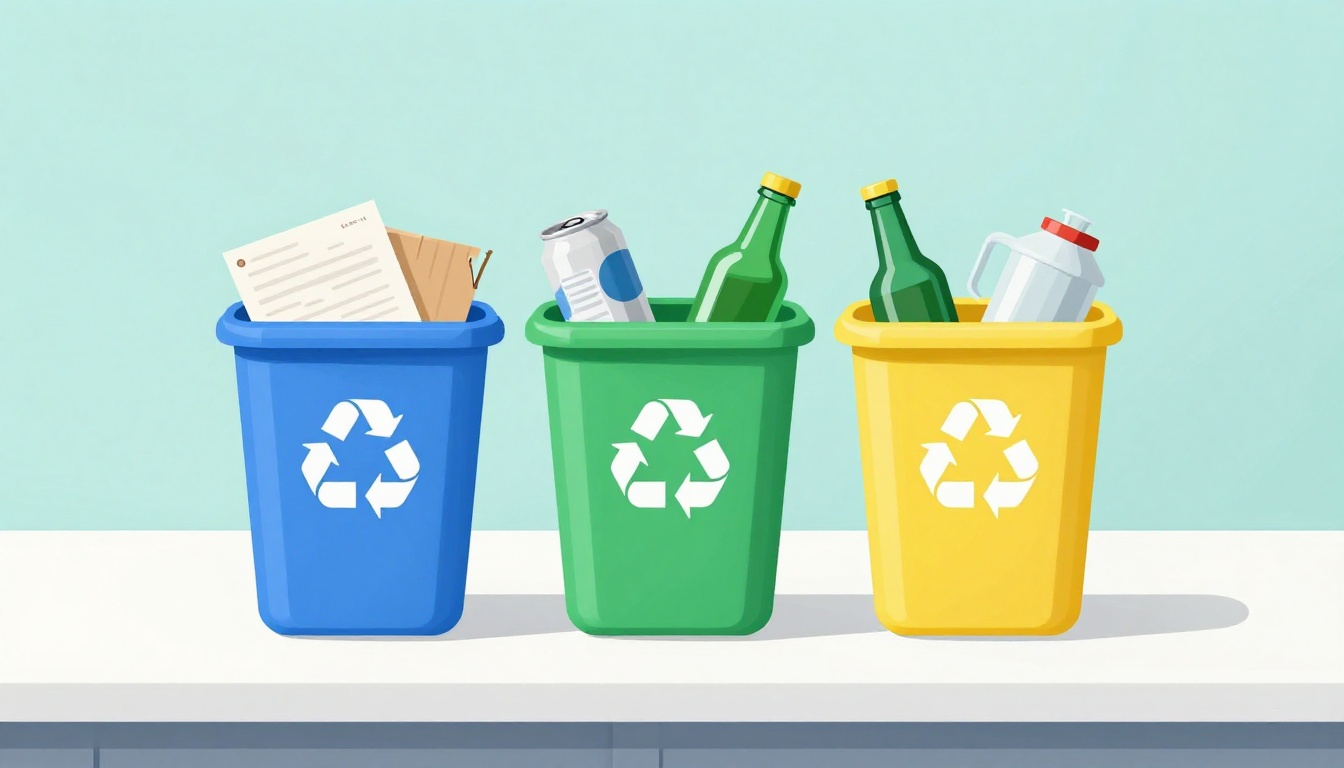
Only about 21% of recyclable household materials actually get recycled in the US. The rest mostly ends up in trash, often because items get contaminated or skipped by local programs. That’s why smart sorting matters.
Recycling helps the environment in practical ways. For example, recycling aluminum uses far less energy than making new aluminum. Still, recycling rules aren’t the same everywhere, and 2026 brings more state programs that change what happens to certain packaging.
Because local rules can shift, this guide focuses on the material types that are most commonly recyclable in the US. You’ll learn what goes in the bin, what usually needs drop-off programs, and what to stop putting in curbside recycling.
Ready to sort smarter?
Paper and Cardboard Items You Can Toss in the Bin
Paper and cardboard are usually the easiest wins. Many curbside programs accept clean paper and flattened cardboard because they sort well and break down in processing. In the US, paper recycling rates are around 65% to 69% overall, and corrugated cardboard is roughly 71% to 76%. That means your boxes can matter a lot.
If you want a quick reference for your area, check your local program’s guide. For an extra starting point, see a 2026 recycling guide for common bin items.

Newspapers, Magazines, and Office Paper
In most places, you can recycle:
- Newspapers
- Magazines
- Junk mail and catalogs
- Envelopes (ideally without heavy coatings)
- Printer paper and office paper
Key rule: keep paper clean and dry. If it’s greasy, it can’t be sorted the same way. Also, remove things that don’t belong, like plastic window inserts when your program asks for it.
Here’s a helpful habit. When you finish with mail, pause for two seconds. If there’s food residue (like takeout sauce spills), it goes to trash. Otherwise, it belongs in recycling.
Cardboard Boxes and Packaging
Cardboard is common because it’s everywhere in deliveries. Generally, clean, dry, flattened cardboard boxes go in curbside recycling.
A few smart tips:
- Flatten boxes to save space and reduce jams.
- Keep boxes free from food and liquids.
- If you get a box with mixed layers, check local rules.
Pizza boxes are tricky. Many programs can take them only when the grease isn’t soaking through. If the top is clean, you may be able to recycle it. If it’s stained, trash usually wins.
Online shopping keeps pushing more cardboard into homes. So if you learn one thing, learn how to prep boxes correctly. That alone can prevent contamination.
Plastics, Metals, and Glass That Actually Get Recycled
These three material groups make up a big share of what curbside programs want. Still, acceptance can vary by city and even by neighborhood. That’s normal, because different facilities handle different streams.
Start with the basics: clean, empty containers. Then match the item to what your local program accepts. For a practical overview of common curbside items, this 2026 guide on what goes in your bin can help you sanity-check items.
Metal Cans from Soda to Soup
Metal cans are some of the most reliable recyclables. Aluminum and steel cans are widely accepted in curbside programs. Rinse them quickly so food doesn’t break down processing.
For motivation, remember the energy payoff. Recycling aluminum cans uses about 95% less energy than making new aluminum. That’s why aluminum is often treated as a top performer.
As for typical outcomes:
- Aluminum cans get recycled at around 45% to 46%.
- Steel cans are around 58%.
You don’t need perfection. You just need to keep cans clean enough to avoid contamination.
Glass Bottles and Jars for Drinks and Food
Glass is also commonly accepted, especially bottles and jars. Most programs sort by color:
- Clear
- Brown
- Green
You usually should not recycle:
- Mirrors
- Ceramics
- Window glass
Lids are a common question. Some areas allow lids to stay on, others want them removed. Since rules differ, check your local guidelines. The safest approach is to follow what your program says.
Rinse bottles and jars, then drain them. When glass is wet, it can stick to other materials during handling.
Plastic Bottles, Jugs, and Containers
Plastics can be confusing, because not every plastic type moves through the same system. Still, many curbside programs accept plastics that are well-known and easy to sort, like:
- PET (#1) bottles (often water and soda bottles)
- HDPE (#2) jugs (often milk and detergent bottles)
Empty and rinse is key. If your container held sticky liquids, rinse again. Food residue and residue film can spoil whole batches.
Avoid tricky plastics unless your city explicitly accepts them. Bags, film wrap, and many tubs or cups often tangle equipment. When in doubt, leave it out.
Also, national data shows plastics recycle poorly compared to other materials. Only about 5% to 9% of plastic is recycled, which is why correct plastic sorting really matters.
Electronics, Batteries, and New Recyclable Surprises
Electronics are the category most people misunderstand. In most cases, electronics are not curbside recycling. Items like phones, laptops, TVs, and printers need special handling so metals and other parts can be processed safely.

Household Electronics and Small Gadgets
Plan on using a dedicated drop-off. That often includes:
- Computers and monitors
- Laptops and tablets
- Phones
- Printers and small devices
Many communities host e-waste events, especially during spring cleanup. You can also look for authorized drop sites through your city or county. The goal is simple: keep electronics out of curbside streams.
Batteries and Emerging Items Like Plastic Buckets
Batteries need extra care. Portable batteries and lithium-ion batteries can cause fires if they’re crushed or short-circuited. For that reason, curbside programs usually do not take batteries.
In 2026, battery programs are changing in more states. For example, Oregon moved toward a system where battery manufacturers create a statewide battery recycling program, according to a local news report. You can read more about that Oregon approach in Oregon’s battery recycling requirement report.
When you recycle batteries, use authorized collection points. Tape terminals if your local program suggests it. Then store batteries safely until drop-off.
Common Items That Clog Up Recycling and Hurt the Process
Recycling fails for one main reason: contamination. Food, liquids, and “wish-cycling” can ruin a whole load.
If you want a rule that saves time, try this: when in doubt, leave it out.
Here are common troublemakers:
- Clothing and textiles
- Furniture and mattresses
- Food waste and greasy leftovers
- Small appliances
- Plastic bags and tangling films
- Greasy pizza boxes and dirty paper
Contamination happens even when you mean well. One half-clean item can spread residue to others. That’s why “rinse but not perfect” is better than “leave it gross.” Also, don’t mix trash into the bin.
Smart Recycling Habits That Work Anywhere in 2026
Because rules vary, your best strategy is consistent prep. Keep items clean, empty, and properly sorted. Then your local system has a better chance of handling them correctly.
Also, 2026 is a year of policy change. Extended Producer Responsibility (EPR) programs push packaging producers to help pay for recycling. In 2026, seven states already have active packaging EPR programs: California, Colorado, Maine, Maryland, Minnesota, Oregon, and Washington. That can expand services and improve options, but it still won’t override local “what goes where” rules.
Use these habits as your baseline:
| Material type | What to do first |
|---|---|
| Paper and cardboard | Keep it dry, then flatten boxes |
| Aluminum and steel cans | Empty, then give a quick rinse |
| Glass bottles and jars | Rinse, drain, sort by color if needed |
| Plastic bottles and jugs | Accept #1 and #2 types, empty and rinse |
| Electronics and batteries | Use drop-offs, not curbside bins |
For national background on waste and recycling trends, the US EPA facts on materials and recycling is a helpful place to confirm big-picture stats.

Conclusion
If you remember just a few categories, start with paper and cardboard, then metals, glass, and #1 or #2 plastics. For electronics and batteries, count on special drop-off programs, not curbside bins.
Above all, your local rules control the outcome. Check your city’s guidelines, prep items the way your program wants, and skip the items that could contaminate the load.
If only 21% of recyclables make it through, then your next good decision matters. Ready to sort smarter?