Ever wonder where your recycling goes after the truck picks it up? In the U.S., each person generates about 4.9 pounds of waste per day on average. At the same time, around 35% of American waste is recycled or diverted (so a lot is in motion every day).
Here’s the twist: how materials are sorted in recycling facilities decides whether they actually become new products, or end up as landfill “residue.” Most curbside programs use single-stream recycling, where you toss paper, plastic, metal, and glass into one bin. Then the real work starts inside a materials recovery facility (MRF).
In a typical MRF, recyclables move through a step-by-step lineup. First, loads get cleaned and sorted for obvious trash. Then screens and air classifiers separate items by size and weight. Next come magnets and eddy currents for metal. Finally, optical sorters use sensors and high-speed sorting to identify plastics and other materials.
If your bin is clean, about 70% often gets recycled in many programs. If it’s dirty, contamination can rise fast, and recovery drops. Let’s walk through that process, from the conveyor belt to the final bales.
What Happens When Trucks Dump Your Recycling?
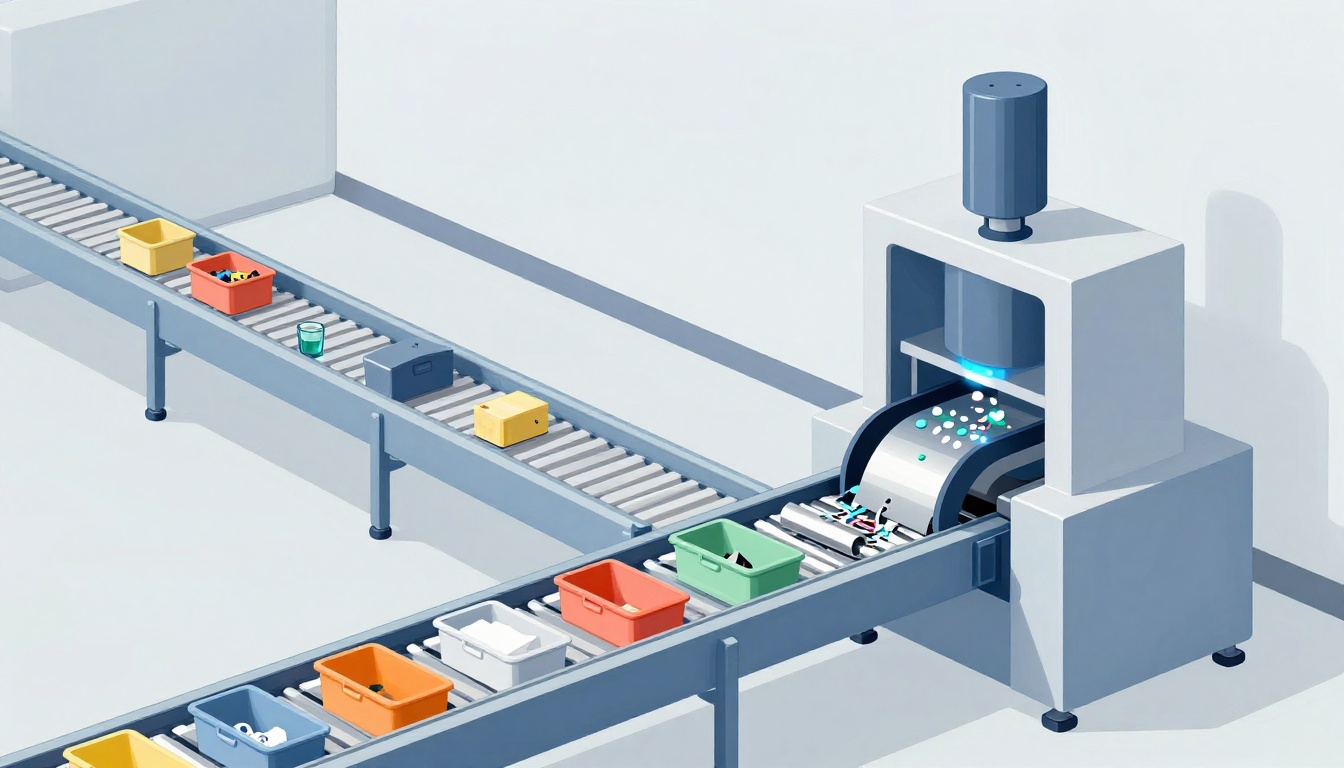
At the MRF, trucks unload mixed recyclables onto a big conveyor belt. The system works like an industrial highway, slow enough for sorting, fast enough for throughput.
Before the main sorting begins, staff and equipment remove items that should never be in recycling. That might include food waste, diapers, or anything that makes a load smell or goopy up. Even small mistakes can spread.

Think about a common example: a pizza box with grease mixed in. If it’s soaked, it can contaminate paper grades. As a result, it may end up downgraded or thrown out.
Single-stream exists to make recycling easy for you. But it also means MRFs must sort a messier mix. If you want a deeper look at how MRFs handle that mix, see How Materials Recovery Facilities (MRFs) Work (SPC PDF).
So what happens next? The belt carries everything into specialized steps that separate materials in a specific order.
Clean, empty, loose recyclables help the machines do their jobs.
Screens Shake Out Small from Large
After the heavy “trash” layer comes off, the feed still looks like a jumble. Now, vibrating screens split items by size.
Small pieces, like bottle caps or tiny fragments, can fall through openings. Larger items, like cardboard boxes, keep riding the belt. This matters because some materials are hard to process when mixed at the wrong size.
In other words, size sorting is like sifting flour. If you don’t separate it first, the next steps struggle.

Air Blows Away Light Paper and Cardboard
Next comes air separation. Air classifiers use strong airflow to move lighter materials.
Light items, such as many paper products, float or get pushed to one side. Heavier items, like glass or dense containers, drop down and continue on.
You can picture it as a controlled whoosh. That airflow often runs early, so the rest of the line deals with fewer mixed types.

Meanwhile, the goal is quality. When paper is contaminated, it can cost more to fix than the value it brings.
How Magnets and Spinning Fields Pull Out Metals
Once size and light-versus-heavy sorting trims the mix, metal removal happens next. This step is fast, and it protects downstream processing from metal chunks.
Metals also have strong market value when they’re clean. So MRFs treat this section like a key checkpoint.

Steel Cans Stick to Powerful Magnets
Ferrous metals, like steel, get pulled by magnets. That’s why many steel food cans end up in a separate bin.
Sometimes the line uses strong overhead magnets. Other times it uses automated systems that collect metal as it jumps toward the magnetic field.
A classic example is tin or steel soup cans. They’re magnetic, so they get separated more easily than non-magnetic metals.
Aluminum Gets Zapped by Eddy Currents
Aluminum needs a different trick. After the steel is removed, eddy current separators use a spinning magnetic field.
This creates a repelling force on non-ferrous metals. Aluminum cans can then fly off into a separate chute, while many plastics and other items keep moving.
So, in simple terms, it’s “magnet for steel,” then “spinning field for aluminum.”
Plastics and Glass Get the High-Tech Treatment
After metals come out, MRFs still face a big challenge: mixed plastics and glass. They can look similar on a conveyor belt, but they behave differently later.
That’s why modern MRFs lean on sensors and quick sorting. If you’re curious about why choices at home matter so much in a single-stream system, this guide explains how your bin ends up being sorted and why contamination hurts: How single-stream recycling works, and how your choices can make it work better.
Optical Sorters ‘See’ Plastic Types with Light
Optical sorters use cameras, lasers, or infrared sensors to identify plastic types (like PET and HDPE). Then they use air jets to push items into the correct bins.
This step is quick. It also helps when the stream includes different colors and different resin codes.
The machine part is impressive, but the input still matters. Grease, liquids, or bags can throw off detection and create extra rejects.

People Provide the Final Human Check
Even with smart machines, human sorting still plays a role. Workers on platforms scan moving items and pull out mistakes.
This “final check” can catch things like wrong plastic types or leftover contaminants. It also helps protect the quality of glass, which is often handled differently than plastics.
When the line catches errors earlier, the rest of the system runs smoother.
From Sorted Piles to New Products: Baling and Trends
After sorting, the materials become cleaner “streams” that can be sold to manufacturers. Then, the MRF packs each stream into big shipments.
That’s where baling comes in. It turns loose items into dense cubes factories can handle.
Squishing into Bales for Easy Shipping
Baling machines compress sorted paper, cardboard, plastics, and metals into large bales. These bales store well and take less space in trucks.
It’s like bundling firewood. Once it’s packed, it’s easier to move, store, and process at the next step.

2026 Tech Making Recycling Smarter
Right now, facilities are upgrading sorting with better sensors and AI. The goal is simple: increase purity and cut down contamination.
For example, AI Sorting Solutions at IFAT 2026 highlights improvements in sensor-based and AI-supported sorting systems. In practice, this can mean faster reads, better plastic identification, and fewer “maybe” items going to the wrong bin.
On top of that, more systems are being built for difficult materials, including electronics and mixed plastics. Chemical recycling also gets attention, but rules and outcomes can vary by location and feedstock.
Most importantly, all these upgrades depend on what you put in the bin.
Conclusion
So, how are materials sorted in recycling facilities? It starts with unloading onto conveyor belts, then removing obvious trash. Next come screens and air separation, followed by magnets and eddy currents for metals. Then optical systems sort plastics, with humans catching mistakes. Finally, materials get baled and shipped to manufacturers.
Your part is the difference between a high-quality load and a contaminated one. Rinse containers, skip bags, and follow local rules. When you do that, the machines can separate materials correctly, and more of it stays out of landfills.
Recycle right next time, and you help turn yesterday’s packaging into tomorrow’s products.