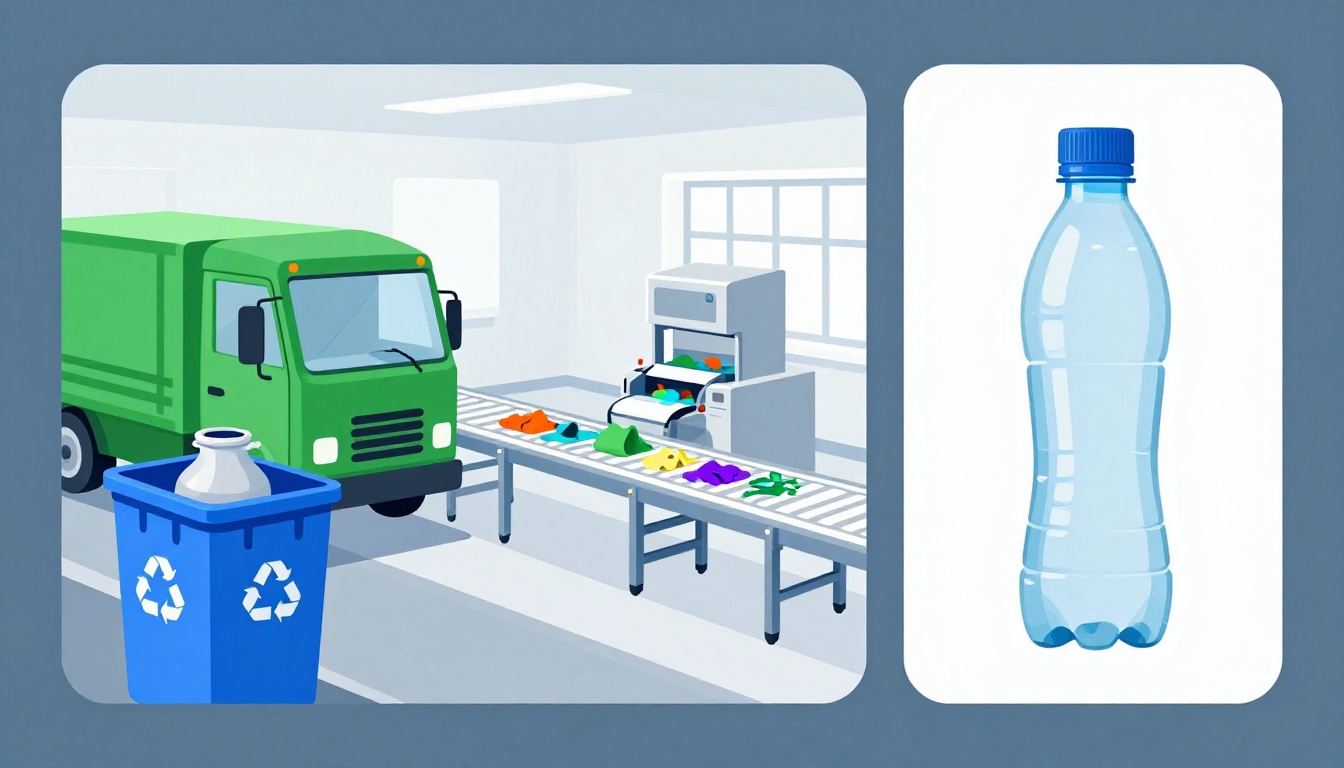
You toss a milk jug in the bin, close the lid, and move on. But that act does not mean the item magically turns into a new product overnight. Most of the time, your items head through a real, physical process that decides what gets recovered and what gets thrown away.
Understanding that journey helps for one simple reason: your choices at home control the outcome. When materials arrive clean and sorted the right way, recycling systems work better. When they arrive dirty or mixed up, the whole load can lose value.
In fact, many recycling programs can recover around 80 percent of the material that is accepted and handled correctly. However, contamination lowers results fast, so the same bin can lead to very different outcomes.
Next, you’ll see what happens after collection, then how sorting at the plant changes your items. After that, we’ll cover how materials get cleaned and remade. Finally, you’ll learn what goes wrong and how to fix it.
From Curb to Plant: How Collection Works
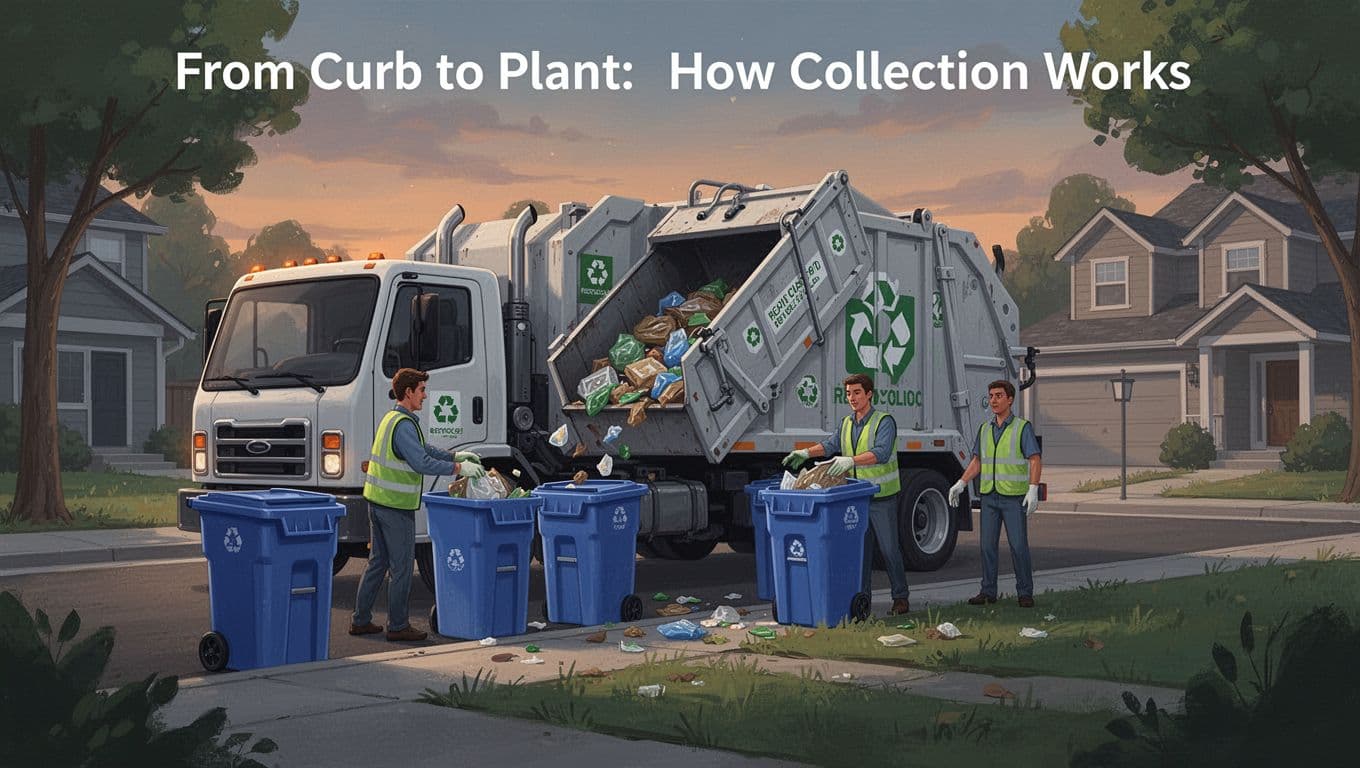
After you put items at the curb (or at a drop-off site), they usually get collected by a truck on a set schedule. The driver loads the bins, then the truck delivers the contents to a facility that can sort and process recyclables. Meanwhile, your neighborhood often looks like a steady chain of activity, with trucks rumbling down the same streets each week.
At this stage, there’s one big question: are you using single-stream or dual-stream recycling? In many places, single-stream means you can put paper, plastics, and metals together in one bin. With dual-stream, you separate items into different bins. If you want a clear breakdown of how these approaches differ, see single-stream vs dual-stream.
Then your truck heads to a materials recovery facility (MRF). An MRF is basically where mixed recyclables become sorted, sale-ready commodities. If you want the plain-English definition, check what a materials recovery facility. This matters because your first step sets up the success (or failure) of everything that follows.
How to prep your bin for a smoother ride
Collection crews and workers can only do so much. If your items arrive messy, they often end up removed during sorting. For best results, do three things:
- Empty and quick-rinse containers so food doesn’t transfer to other items.
- Keep items loose, not bagged. Film bags and thin plastics often tangle machines.
- Follow local rules for tricky items like foam, hoses, or “mixed paper.”
As a rule, think of your bin as a batch that needs to stay as clean as possible, not as a “maybe recycle it later” pile.
Sorting Secrets at the Recycling Plant
Once the truck unloads at the MRF, your recyclables enter a high-speed system. This is where “mixed” becomes “sorted,” and where the plant decides what products it can actually make. Your items move onto conveyor belts, and they start separating into categories like paper, aluminum, steel, and different plastic types.
Some plants also use advanced tools, including cameras and sensors. Workers still play a role, but the machines handle the bulk. If you want a closer look at how MRF sorting is designed, see how a modern MRF sorts.
However, contamination can throw a wrench into the whole plan. Food residue makes paper soggy and plastics dirty. Plastic bags act like glue, wrapping other items. Wrong items, like toys or hoses, can slow belts and damage equipment. When that happens, the plant may discard more material than you’d expect.
Here’s the key idea: the plant isn’t just sorting. It’s also protecting the quality of the output. Clean, consistent batches sell better to reprocessors. Dirty, mixed batches often end up landfilled.
High-Tech Machines That Make Separation Possible
MRFs use several separation steps, often working at the same time.
Air blasts can lift light materials away from heavier ones. Magnets grab ferrous metals, like many steel cans. Then optical scanners and sensors identify plastics based on how they reflect light and how they behave under different systems. Water tanks can use density to separate materials, so plastics may float while glass sinks.
If you’ve ever watched a magnet pull metal from a pile, you get the idea. It’s fast and dramatic, and it helps build cleaner streams.
Also, newer AI systems can spot patterns faster than humans. In 2026, more plants are using camera-based sorting plus learning software to reduce mistakes. That means fewer “good” items get rejected, and fewer “bad” items slip through.

Humans and AI Teaming Up Against Contamination
Even with machines, people still do quality control. Workers watch the conveyor belt and remove obvious contaminants. They might pull out diapers, greasy pizza boxes, or items that clearly don’t belong. Meanwhile, AI systems flag suspicious materials that look wrong on camera.
This teamwork matters because contamination can cut recovery by about 20 to 30 percent in many situations. Once contamination spreads through a batch, it’s not just one item. The whole load can lose the purity needed for recycling.
Common examples include:
- Food-soiled containers, like sauce bottles or takeout tubs
- Plastic bags and wrap, which tangle and contaminate
- Styrofoam and foam packaging, which often can’t be processed the same way
- Non-recyclable plastics, like certain rigid items without a local market
If you want practical prevention ideas, avoid recycling contamination offers easy, real-life fixes.
Cleaning and Transforming Materials into New Forms
Sorting isn’t the end. After the plant separates materials, it moves them into cleaning and processing steps. First comes washing and removing leftovers. For example, plastics get scrubbed to remove labels, glue residue, and dirt. Paper gets pulped, and metals get prepared for melting or reuse.
Once materials are clean enough, they get transformed into feedstock for manufacturing. Then manufacturers can turn those feedstocks into new products.
Think of it like baking. Sorting is like separating ingredients. Cleaning is like washing the flour bowl. Transforming is what happens when you bake and get something usable.
Because of that, the cleaner your inputs are, the smoother this part goes.
Plastics: From Bottles to Pellets
Plastics recycling often follows a common flow: sort by plastic type, then wash, shred, and process into smaller pieces. For many systems, PET and HDPE bottles are the best match for steady markets. Those materials get ground into flakes, then heated and melted into small pellets (sometimes called “nurdles”). Manufacturers can then use those pellets to make new bottles, containers, or fibers.
Lower-demand plastics, like certain types labeled 3 through 7, can be harder to recycle. Even when a plant accepts them, the local market may not buy them consistently. That’s why local rules matter more than what you see printed on a label.
If you want a deeper look at how this plastic chain works, check plastic recycling process.

Paper, Glass, and Metals Get Their Makeovers
Paper usually gets pulped, meaning it turns into a fiber mixture you can roll into new sheets. That pulp process removes many impurities so paper quality stays strong enough for new products.
Glass goes through crushing into smaller pieces called cullet. After that, cullet gets heated and melted into new glass items. Because glass can be remelted repeatedly, it can be a long-term option when it stays clean.
Metals typically get shredded and prepared for melting. Then they get poured into molds for new cans, parts, or other metal goods. In many cases, aluminum can keep its value well, and it often has strong demand.
In short, each material type follows a different path. Still, they all depend on the same thing: keeping contaminants out.
Baling, Selling, and Back to Store Shelves
After processing, materials often get compressed into large bales or other shipping forms. Baling helps reduce volume, so it costs less to transport. Then trucks carry those bales to manufacturers or reprocessors who buy recyclables as raw stock.
From there, the “recycled” part becomes real products. Recycled paper might become new packaging. Recycled plastics can become fabric, containers, or more bottles. Recycled metals can return to can production or other uses.
Some systems report strong recovery when contamination stays low, and reuse rates can get close to 80 percent in well-run facilities. When inputs are clean, the recycled output can match the quality needed for new manufacturing.
So yes, recycling can return to daily life. You might see it as a new cardboard box, a bottle on a shelf, or a can in your pantry.

What Goes Wrong: Non-Recyclables and Fixes
Sometimes your bin still ends up as trash. Not because recycling “failed,” but because the batch got too contaminated or too hard to process.
Plastic bags, wrap, and thin film often slip into sorting steps and tangle equipment. Styrofoam may break into beads that cause handling problems. Batteries and many electronics bring safety risks and may require special handling. Greasy materials can ruin paper and contaminate other streams.
When these items show up, the plant may remove them. In some cases, the plant discards whole portions of the incoming load. That’s why you might feel like “I did everything right,” yet the results still disappoint.
The fix starts at home, and it’s surprisingly simple.
First, rinse food off. Next, don’t bag recyclables. Then, check local rules for foam, film plastics, and specialty items. Many areas also run business recycling collection programs, which can create cleaner, more consistent streams. In 2026, more of that “right material, right stream” idea is showing up in local services, especially for plastics and mixed packaging.
If you want one mindset to keep: your goal isn’t to recycle more items. Your goal is to recycle the right items in a clean state.
Conclusion: The Real Impact of Your Bin
So what happens after you put items in a recycling bin? They get collected, sorted, cleaned, and remade. The journey is real, and it depends on the quality of what you leave at the curb.
Most importantly, contamination is the bottleneck. When you empty, rinse, and follow local rules, your recyclables have a much better chance of becoming new products instead of ending up in a landfill.
One more reason to stay consistent: recycling aluminum can save about 90% of the energy used to make new aluminum from raw materials.
Next time your bin is half-full, treat it like a promise to the process. Rinse recyclables, check what your local program accepts, and share these tips with someone who wants to recycle smarter.