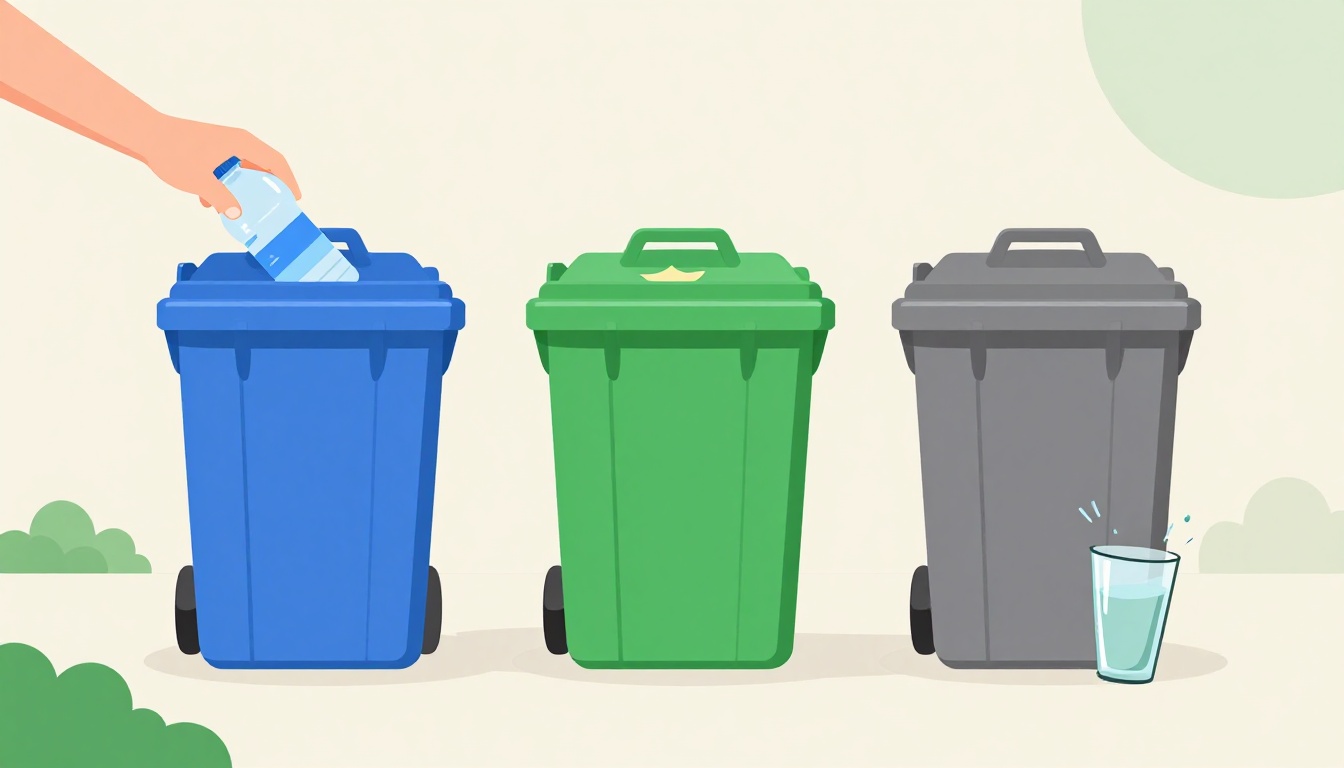
Americans generate about 4.9 pounds of waste per person each day in 2026. That pile doesn’t stay put. It ends up in landfills, recycling plants, compost facilities, or incineration.
So here’s the key idea: proper waste separation means you sort your trash into the right groups at home or work. Think recyclables, compost, and landfill items. When you get that right, you protect the planet, support public health, and can even cut costs.
And because laws are tightening, getting waste separation right now helps you stay ahead. Next, let’s connect what you do at the curb to what happens after pickup.
How Waste Separation Shields Our Planet
Waste separation matters because mixed garbage is like mixing ingredients for a bad meal. Once food, plastic, paper, and chemicals are all tangled together, it gets harder to recover useful materials. Then more of it goes to the landfill.
In the U.S., recycling has grown a lot over time. Recycling hit about 35% in recent years, up from around 7% in 1960. That shift matters because each can, carton, and bottle pulled from trash reduces how much space landfills need. It also slows resource waste, since new products can use recycled materials.
There’s also climate impact. Landfill methane comes largely from rotting organics. When you keep food scraps out of the landfill and send them to compost, methane risk drops. Some forecasts suggest methane emissions could fall by as much as 8 million tonnes yearly by 2030. By 2050, composting and better organics diversion could reduce greenhouse gas output by about 49 million tonnes, depending on programs and participation.
Globally, the scale is huge. Waste generation rose from about 2.01 billion tonnes in 2025 to around 2.3 billion tonnes by 2030. That’s why proper separation is no longer just a “nice to have.” It becomes a pressure release valve for land, air, and water.
Shrinking Landfills and Freeing Up Space
When recyclables and organics show up as clean streams, facilities can process them faster. When they show up as mixed trash, they often get treated as landfill material.
Separation reduces the amount of “extra” waste that landfills have to swallow. It also helps cities plan better. Fewer tons mean more time before new landfill capacity is needed.
It can also change what land gets used for next. Less landfill space over the long run means communities have more options. Parks, housing, and safe community space become more realistic.
A simple example helps. If you toss food scraps in with everything else, they contaminate the rest. But if you sort them for compost, you prevent that spillover. Then paper towels and yard waste can break down in the right system.
If you want a clear reference for how the U.S. system is meant to work, the EPA explains the goals of recycling and how materials move after collection in Recycling Basics and Benefits | US EPA. It’s a good way to connect “what you sort” to “what the system can actually do.”
Slashing Pollution and Greenhouse Gases
Landfills are not just a storage site. They also create pollution. One major issue is methane. When organics rot without oxygen, methane forms. Methane is a potent greenhouse gas.
That’s where separation helps the most. Food scraps, coffee grounds, and yard waste belong in compost systems, not landfill bins. When they break down in composting, the emissions profile is usually lower than landfilling.
Separation also reduces odors and leachate risk. Leachate is the liquid that can form as waste breaks down and mixes with water. When waste stays mixed, leachate can carry more contaminants. When you separate, you help keep harmful mixes out of the wrong stream.
Cleaner processes mean fewer nasty byproducts for nearby neighborhoods. People notice it as smell and smoke. They can also see it in stormwater quality after heavy rain.
Preserving Natural Resources for the Future
Recycling doesn’t just deal with today’s trash. It reduces the need to pull new materials from the ground.
Metals, paper, and many plastics can be made again using recovered inputs. That matters because mining and logging add pollution and require energy. In contrast, recycling often uses less energy than starting from raw materials.
Think about aluminum cans. When people recycle them, manufacturers can melt and remold metal instead of extracting new ore. The same idea applies to paper. If paper stays clean enough, it becomes pulp again for new products.
Even if you only change one habit, separation can cut the demand for new production. That protects habitats and reduces waste upstream.
If you want the bigger picture of how the recycling system works in the U.S., use The U.S. Recycling System – EPA. It explains why source quality (what you put in the bin) affects what’s possible later.
Protecting Health in Our Communities
Waste separation protects health in ways that don’t always make the news. But your neighborhood can feel the difference.
When trash is managed poorly, it can create unsafe conditions. Mixed waste increases the odds that harmful materials end up where they shouldn’t. It also makes pests easier to attract and spread.
In communities with fewer resources, these risks often grow. Some reporting links high waste mismanagement rates in low-income areas to more contaminated water and worse air exposure. That’s not random. It’s a system problem. Separation helps reduce how much dirty runoff and harmful fumes get created locally.
Stopping Disease Spread from Trash
Trash can invite pests. Rodents, flies, and other vectors move through mixed garbage easily. They can pick up bacteria and then spread it to food and surfaces.
When waste is sorted, hazards get kept apart. You reduce the chance that food waste mixes with other materials that increase pest attraction. You also improve how quickly facilities process certain streams.
At home, it’s not just “the smell.” It’s the safety step. A sealed bin with proper sorting helps you prevent spills and overflow. It also reduces the time waste sits around.
Separation also helps waste workers. When bins contain the right items, crews can handle materials more safely. That lowers the risk of contact with sharp objects, unknown chemicals, or contaminated waste.
Ensuring Cleaner Air and Water Supplies
When organics go to landfills, they can produce odors and pollutants as they break down. That can affect air quality over time, especially near large disposal sites.
In addition, leachate is a major concern. Rainwater can pass through waste and pull out contaminants. When mixed waste includes more hazardous components, the risk rises.
Proper separation reduces that mix. Composting organics at the right sites limits how much rotting material ends up in landfill cells. Recycling also keeps some contaminants out of landfill streams.
You don’t have to be an expert to understand the connection. When you reduce the wrong materials in the wrong place, you reduce how much pollution spreads.
For a closer look at health risks tied to toxic landfill sites, see Toxic US Landfills: Overheating Trash Sites Pose Health Risks. Stories like this show how waste choices can affect people nearby, not just the environment.
Reaping Big Economic Rewards
Proper separation isn’t only about doing the right thing. It can also bring real economic benefits.
First, recycling and organics diversion create market value. When sorted materials are recoverable, they can become feedstock for new products. That supports more stable supply chains.
Second, it can reduce waste disposal costs. Less landfill material usually means lower hauling and tipping expenses for cities and waste haulers. In many places, that cost trickles down through fees and services.
Finally, there’s job growth. Recycling and recovery need people. They need drivers, sorters, processors, mechanics, and inspectors. Better separation improves the flow of materials, which keeps operations running.
In the U.S., an economic impact study highlighted that the recycled materials industry generated nearly $183.63 billion in total economic activity in 2025. It also supported about 602,954 jobs, according to the Recycled Materials Association study coverage in ReMA study shows economic impact of industry in U.S. – Waste & Recycling.
Generating Jobs and Growing Local Economies
When separation improves, recycling systems can run more smoothly. That helps local recovery businesses. It also creates steady work tied to processing and logistics.
You can think of recycling like a pipeline. If the feedstock is clean, the pipeline runs. If it’s contaminated, the pipeline slows down or stops.
Better separation increases the supply of usable materials. That makes it easier for processing plants to buy feedstock. Then those plants need staff and contractors. Over time, that strengthens local economies.
E-waste is another example. Many cities and counties run take-back programs. When people sort electronics correctly, valuable materials can be recovered. That supports specialized recovery workers.
Construction waste also benefits from separation. Clean streams from demolition can be sorted into reusable materials, like metals and clean aggregates. That supports trades and reduces the need for new raw inputs.
So even if you only think in terms of “my trash bin,” your sorting choices still help create real work.
Saving Money on Waste Disposal
Households feel waste costs in different ways. Some pay per bag. Others pay through property taxes or utilities. Still others pay as part of service fees.
When separation works, you send less material to landfills. That often means lower disposal needs. In addition, you reduce contamination that can force extra handling.
For businesses, the financial upside can be even clearer. Companies can separate cardboard, plastics, and metals more consistently than homes. When they do, they often recover more materials and reduce disposal volume.
There’s also the “hidden” cost of poor sorting. If a facility rejects contaminated loads, someone pays for rehandling. Trucks may make extra trips. Facilities may spend time sorting manually.
The safest way to avoid those costs is simple. Put the right item in the right bin, the first time.
Staying Ahead of Laws and New Trends
Waste rules are tightening across the U.S. State and local programs are expanding. Many areas also push for organics diversion, recycling quality, and producer responsibility.
In the U.S., the Resource Conservation and Recovery Act (RCRA) helps set the foundation for how waste is handled. Separately, “extended producer responsibility” (EPR) approaches are growing. EPR shifts some responsibility to makers and brands.
Food waste rules are also moving. After 2025, more states and local governments require composting or organics diversion in different settings. Some areas even target landfill disposal of food waste.
At the same time, climate action plans are broadening globally. Many countries include waste targets in climate plans, with over 150 countries involved in some form of national commitments. The U.S. recycling rate is often cited around 34%, depending on the year and reporting method.
Meanwhile, cities are adopting new tools. Some reports cite that about 12% of cities use smart bins. These bins can track fill levels and help reduce extra pickup trips. AI sorting is also improving. One common benchmark is 95% accuracy in ideal sorting conditions, while manual sorting has been described as closer to 75% for many facilities.
Even if you never touch smart bins, separation still matters. Your materials feed those systems.
Key Regulations Every Household Should Follow
You don’t need to memorize every law. But you should follow the separation rules where you live.
Start with the basics. Many programs accept paper, cardboard, metals, and certain plastics, but they reject “wish-cycling.” Wish-cycling means putting items in recycling hoping they’ll be processed, even if the local program doesn’t accept them.
Also, food waste rules can vary. Some places require composting. Others require organics diversion for schools and food service.
For federal context on food waste and organics, the USDA summarizes the national approach in National Strategy for Reducing Food Loss and Waste and Recycling Organics. It’s useful background if you want to understand why organics diversion is becoming more common.
Here’s a simple home approach that fits most areas:
- Separate food scraps from landfill trash, if your city allows composting.
- Keep recyclables clean and dry, and follow your local “what’s accepted” list.
- Set aside hazardous items for proper drop-off (paint, chemicals, batteries).
When you do these three things, you reduce contamination and make your local system work better.
Tech Innovations Simplifying the Process
Technology can help, but it can’t fix bad sorting. If mixed waste enters a facility, AI still has to deal with it.
That said, newer tools can reduce errors. Smart bins can track fill levels, so trucks take fewer trips. That reduces fuel use and costs.
AI-assisted sorting can also improve sorting quality. When sensors identify materials accurately, facilities can reduce contamination in recycled outputs. Some systems are designed to separate paper from plastics more reliably than manual handling.
Still, the process starts with you. Clean separation at home reduces the burden on the facility. It also improves what comes out the other end.
If you want a mindset shift, think of waste separation as quality control. You’re not just throwing something away. You’re giving the next step a better chance to succeed.
Conclusion
Proper waste separation is important because it changes what happens after pickup. Your sorting choices protect the planet, reduce pollution, and help keep communities safer.
You also get practical wins. Cleaner streams support jobs, reduce disposal needs, and lower the chance of extra rehandling. Then, when laws tighten, you’re already set up to comply.
So, take one small step today. Label your bins at home, check your local rules, and separate food scraps when you can. If 4.9 pounds a day sounds big, remember this too, one correct habit still makes a real difference.
What item do you think you struggle with most, food scraps, plastic, or paper?