
Every day, people add to a mountain of trash. In 2026, that pressure is only growing, so recycling has become one of the most practical tools you have. The catch is that not all recycling programs perform the same.
Efficient recycling usually means two things: high recycling rates and low landfill use. When governments build the right system, people do the right thing without much extra hassle.
So which countries are leading right now? Let’s look at the standouts, how they got there, and how you can apply the same ideas at home.
Austria, Germany, and Other Recycling Standouts
A good recycling program feels “normal,” not like extra work. Top countries reduce contamination, collect materials consistently, and make sure sorting actually pays off. As a result, they keep more waste out of landfills.
Recent global rankings based on municipal waste recycling show the leaders clearly. Austria sits at the top (59%), followed by Wales (59%) and Taiwan (53%). Germany and Belgium are also in the high-50s range.
For context on how these rankings work, see the Global Recycling League Table coverage, which highlights why Europe dominates the top spots.
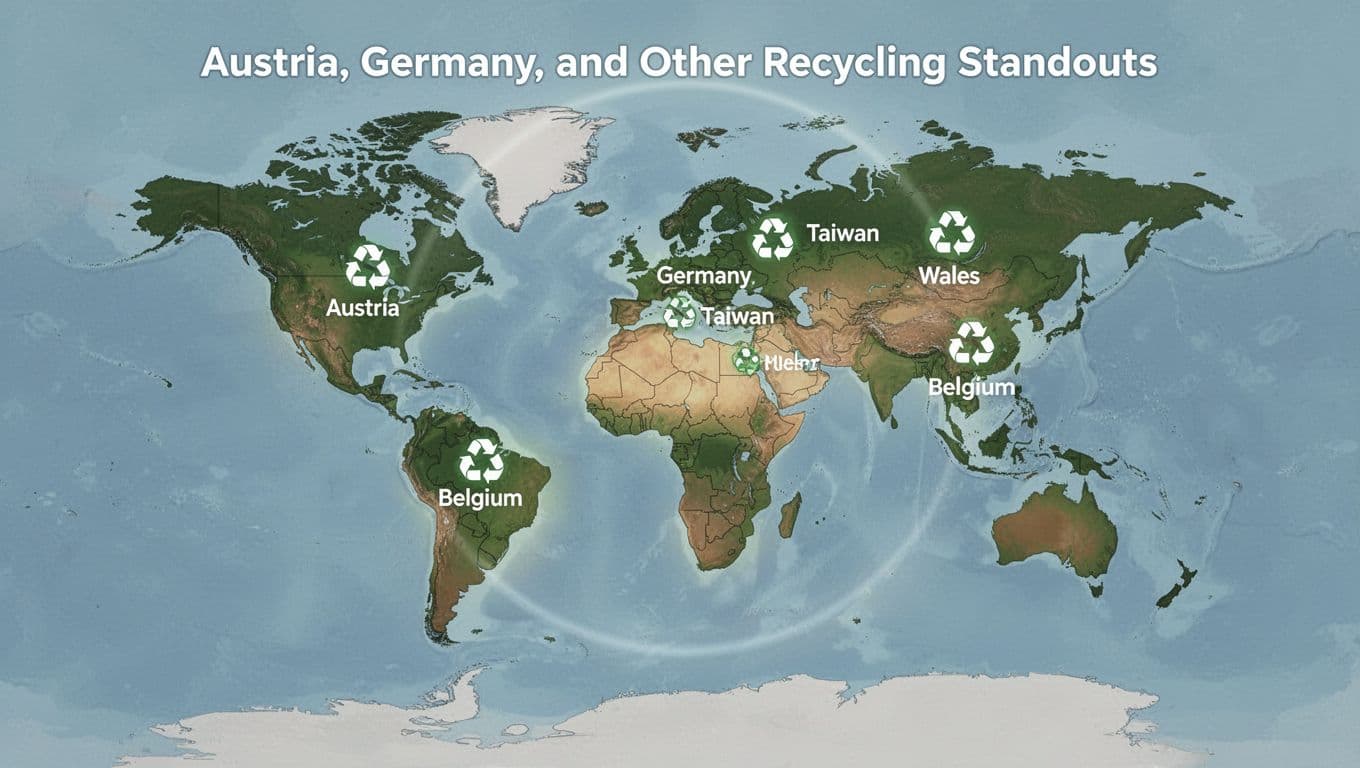
Here’s a quick look at the top 10 municipal waste recycling rates:
| Rank | Country | Recycling rate (municipal waste) |
|---|---|---|
| 1 | Austria | 59% |
| 2 | Wales | 59% |
| 3 | Taiwan | 53% |
| 4 | Germany | 52% |
| 5 | Belgium | 52% |
| 6 | Netherlands | 51% |
| 7 | Denmark | 51% |
| 8 | Slovenia | 50% |
| 9 | Northern Ireland | 45% |
| 10 | South Korea | 45% |
What stands out? No country breaks the 60% mark in this municipal waste comparison. That doesn’t mean they “failed.” It means systems have limits because some waste is hard to recover, like food waste and mixed materials.
Quick notes on the top performers:
- Austria: strong sorting habits and long-term infrastructure that makes recycling easy.
- Wales: clear targets that push local action and reduce missed pickups.
- Taiwan: steady education plus rules that improve sorting at home.
- Germany: deposit-return systems that bring high-quality recyclables back into the loop.
- Belgium: dense collection networks that keep participation high.
Now let’s zoom in on four core leaders and what makes each one work.
Austria’s Top-Spot Recycling Machine
Austria ranks first at 59% municipal waste recycling. That’s a high number because it’s measured against the toughest benchmark: what households and similar sources produce.
The “machine” isn’t one magic policy. It’s a system. For decades, Austria built collection routes, sorting options, and processing capacity, then kept improving them. People also know what goes where, and they see the results.
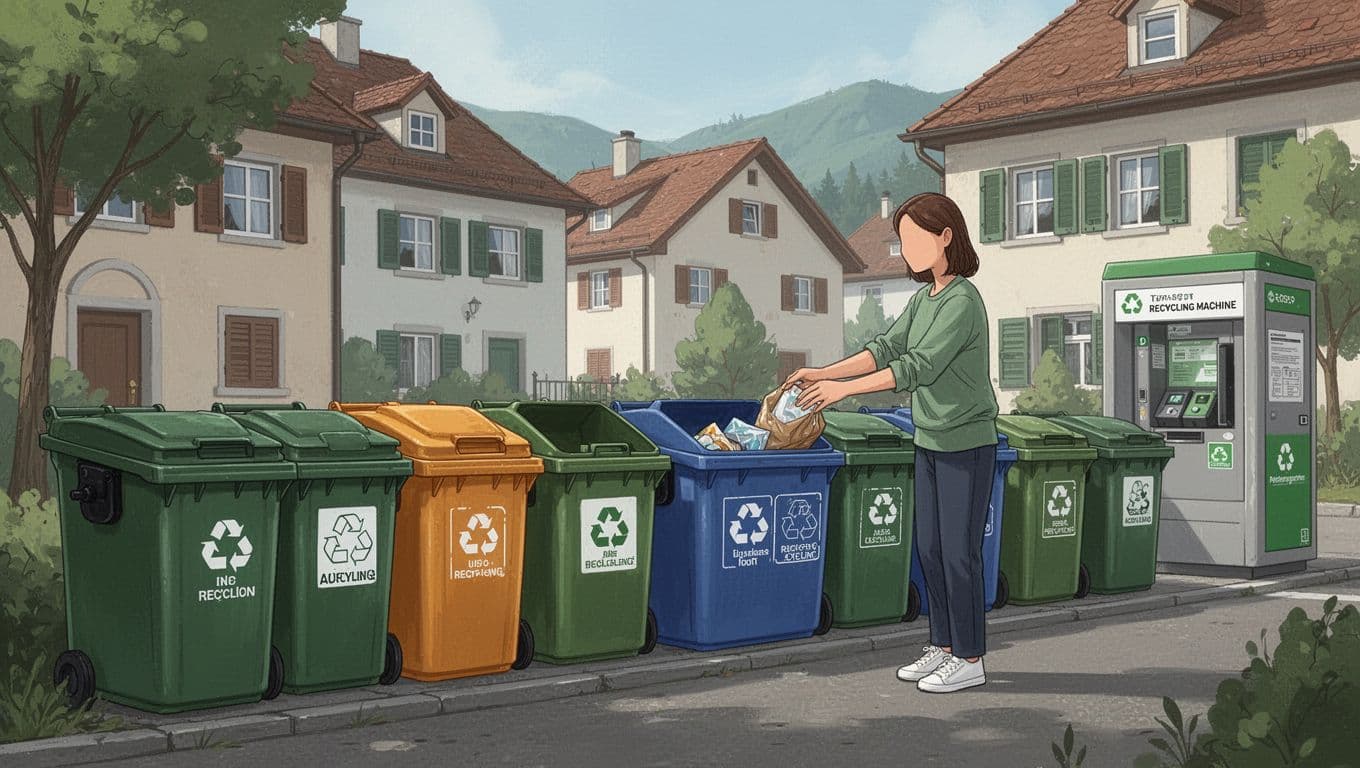
A helpful way to think about this is like cooking. If the pantry is organized, you can make dinner fast. If not, you waste time and you make mistakes. Austria’s setup reduces mistakes.
A fun side effect of strong collection networks is that recycling becomes part of the weekly routine. You don’t need to guess. You sort, you drop off or set out bins, and the rest happens through planned logistics.
Also, Austria leans on a circular economy mindset, meaning materials should keep getting reused instead of disappearing after collection. That’s why the infrastructure matters just as much as the bin color.
If you want a broader look at why Austria keeps winning in these league tables, this TOMRA overview of top recycling rates summarizes the study behind the rankings and the common drivers behind them.
Germany’s Green Machine in Action
Germany lands at 52% municipal waste recycling in the latest municipal comparisons. Still, Germany is one of the most recognizable recycling examples worldwide because it combines strict sorting with incentives.
One major reason is simple: bottles and cans earn money back. Deposit-return programs make recycling feel like a trade, not a chore. People return containers because it’s convenient and it pays.
Germany also runs on clear rules. At home, strict sorting reduces contamination. Then recycling plants can process cleaner material more efficiently. That matters because mixed waste forces extra steps and lower yields.
Another driver is accountability beyond households. Producer responsibility laws push companies to handle end-of-life packaging and waste systems. In short, the cost doesn’t fall only on families or local governments. Instead, the system plans for the waste it will receive.
This is where efficiency shows up. Good rules reduce the “wrong material” problem early. And when the front end works, the back end runs smoother.
Taiwan and South Korea’s Asian Recycling Edge
Taiwan is at about 53% municipal waste recycling in these rankings. South Korea is listed at 45% municipal waste recycling, but it also shows up in material-specific recovery discussions.
What links Taiwan and South Korea is fast improvement. Both have invested in public sorting and clear expectations. They also run education campaigns that make recycling feel like normal behavior.
In Taiwan, mandatory sorting paired with long-running education helps. Over time, people stop treating recycling as a special task. They follow routines.
South Korea is a good reminder that recycling efficiency isn’t only about municipal waste rates. Some systems do better when they measure the recovery of specific materials. That can produce higher figures for certain recyclable streams, even if the municipal totals remain lower.
Also, both places use technology where it helps. For example, advanced sorting at facilities can boost recovery from mixed streams. When better sorting tech meets better collection habits, you get cleaner output and higher recycling performance.
So the takeaway is clear. Asian leaders often win by improving both the “people side” and the “plant side,” then tightening the handoff between them.
Wales and Belgium’s Rule-Enforced Wins
Wales and Belgium both sit at around 52% to 59% in municipal waste recycling comparisons. Their success shows how enforcement and convenience can go together.
Wales has pushed recycling through strong targets and enforcement mechanisms. When local systems must meet performance goals, they plan better. They track issues sooner. They also fix gaps, like missed pickups or confusing bin rules.
Belgium benefits from dense collection networks and consistent access points. When recyclables are easy to drop off or set out, participation rises. And when participation rises, facilities can plan for steady volumes.
Wales also illustrates a key idea: rules work best when they focus on repeat behavior. When systems correct the common mistakes, fewer people feel punished for one-time slips.
Regional context matters too. Northern Ireland appears at 45%, and Slovenia sits near 50%. That doesn’t mean the region lacks effort. It means the basics still vary, like collection coverage and local processing capacity.
In other words, Europe’s top results aren’t random. They come from policy, infrastructure, and daily routines that reinforce each other.
Secrets to Their Recycling Success
Top recycling countries share patterns. It’s like building a bike instead of asking people to run faster. A working bike makes speed possible.
Here are the most common factors behind the leaders:
- Long-term planning: systems last for years, not months.
- Easy access: collection schedules and drop-off options reduce friction.
- Sorting that matches processing: the waste you collect should fit the plants you have.
- Culture and education: people learn, then the habit sticks.
- Rules and accountability: the system corrects poor performance over time.
The best part is that these factors are portable. You don’t need a carbon copy of another country. You need a plan that fits local waste flows and local behavior.
Next, let’s break those factors into practical pieces you can recognize anywhere.
Investing Big in Sorting and Plants
Recycling fails when the “middle” breaks. That middle is sorting, collection routes, and recycling facilities.
Efficient programs invest in the facilities that handle different materials. They also build collection networks that bring in steady feedstock. When volume and mix stay stable, plants operate more efficiently.
Convenience matters, too. When bins show up on schedule and people know how to sort, contamination drops. Lower contamination usually means higher-quality outputs.
You can think of it like laundry. If you sort clothes right, you avoid re-washing and wasted water. Same idea with recyclables. If you keep dirty materials out, processing gets easier.
Across Europe, many high performers use coordinated bin systems and frequent pickup or drop-off points. That helps people recycle consistently instead of “sometimes” recycling.
Even if your local area can’t build new plants right away, small upgrades can help. Better sorting equipment, clearer pickup guidance, and smarter container placement can improve results quickly.
Building a Habit Through Culture and Education
Education sounds soft, but it drives hard outcomes. When people understand the rules, they make fewer mistakes. Fewer mistakes improve recycling quality.
In places like Austria and Germany, recycling works because it’s normal. Children learn sorting habits early. Local media reinforces them. Communities also talk about “what goes where,” so it spreads beyond schools.
This habit-building also reduces confusion. If rules change, people already know the baseline. Then adjustments stick faster.
One underrated factor is feedback. When residents see that their recycling actually gets used, they keep participating. If recycling feels like a dead end, motivation drops.
That’s why consistent messaging matters. Leaders repeat the basics until they become routine. They don’t treat recycling like a one-week campaign.
Over time, culture turns recycling from an event into a habit, which boosts efficiency year after year.
Tough Rules and Smart Incentives That Work
Rules can be strict without being chaotic. The goal isn’t to shame people. The goal is to steer behavior and reduce wasted material.
Wales shows how targets and local consequences push systems to perform. Germany shows how incentives like deposit-return make recycling financially rewarding.
There’s also a balance between enforcement and fairness. When programs explain the rules clearly, most people comply. Then enforcement focuses on repeated problem behavior.
Incentives help because they turn recycling into an everyday action. Penalties and targets help because they motivate governments and service providers to fix breakdowns.
A simple analogy fits here. If traffic laws never get enforced, drivers ignore the rules. If you enforce fairly, driving gets safer and smoother. Recycling works the same way.
When leaders combine rules, incentives, and education, they create a loop. People sort better. Facilities get cleaner inputs. Cities reduce landfill reliance. Then the system earns even more trust.
How Recycling Efficiency Gets Measured
This is where many comparisons get confusing. Different rankings use different definitions of “recycling.”
In municipal waste rate rankings, the measure focuses on what households discard and how much gets recycled rather than landfilled. Other systems measure “waste recovery,” which can include waste burned for energy.
That difference is huge. So you can’t always compare a municipal recycling rate to a recovery score without understanding what’s included.
Also, measurement methods vary. Some studies count collection as recycling even if some material later ends up discarded. Others separate “collected” from “processed.”
No wonder results can look inconsistent.
Municipal Waste vs. Total Recovery Rates
To see why, look at waste recovery scores. Recovery often includes recycling plus energy from waste, so it can reach near 100%.
For example, Environmental Performance Index data shared through rankings shows:
- Switzerland: recovery score around 100
- Denmark: recovery score around 99.9
- Finland: recovery score around 99.4
That’s very different from municipal recycling rates, where leaders top out near 60%.
If you want a view of how different recovery and recycling scores get reported, check recycling rates and recovery scores by country.
Here’s the bottom line. A country can look “near perfect” on recovery while still recycling a smaller share of municipal waste.
That’s not a contradiction. It reflects different end goals, different facility types, and how the system treats non-recyclable waste.
Why Numbers Can Trick You
Even the best rankings can mislead if you ignore definitions.
First, municipal waste and total waste recovery aren’t the same bucket. Second, “recycled” can mean different things depending on the study. Third, contamination can lower actual processing performance even if collection seems high.
In the real world, waste is messy. Food residue, mixed materials, and low-value plastics can disrupt sorting lines. As a result, leaders still dump or burn some fraction.
Also, global rankings sometimes change when researchers re-check data. For example, some countries report higher figures at first, then drop after tighter definitions and adjustments.
That’s why it’s smart to ask one question before comparing countries: What waste stream and what definition?
If you don’t, you end up comparing apples to boxes.
Lessons for Better Recycling Worldwide
So what should countries that lag do next? Most leaders didn’t start perfect. They built systems step by step, then kept tightening them.
You can summarize the lessons like this:
- Prioritize collection and sorting that match your processing capacity.
- Make the rules simple and keep them stable long enough for habits to form.
- Measure outcomes the same way so you can fix what’s real.
- Use incentives and accountability to improve performance, not just to announce goals.
If you’re looking at the United States, the biggest opportunity is consistency. The U.S. recycling rate in 2026 is about 32% to 35% for municipal waste recycling plus composting, with total diversion closer to the high-30s when energy recovery counts. That means the country has a lot of room to improve both sorting and participation.
For a broader look at comparisons and how different countries rank in these discussions, see global recycling leadership in 2026.
Meanwhile, don’t wait for national policy to change. You can still push local upgrades. Ask your city about contamination rates, bin standards, and what actually gets processed. Then support programs that expand access and clarify sorting.
If enough communities ask for the same improvements, the system shifts.
Conclusion
Austria and Germany lead in municipal waste recycling efficiency, and countries like Wales, Taiwan, and Belgium follow close behind. Across regions, the winning theme stays consistent: strong systems beat wishful recycling.
Efficient programs invest in sorting and plants, teach habits over time, and keep rules and incentives tied to real results. Just as important, the best comparisons depend on measurement definitions, because “recycling” and “recovery” don’t always mean the same thing.
Now, here’s a simple next step. Check what your local program accepts, sort correctly, and reduce contamination at home. Your effort becomes cleaner feedstock, and cleaner feedstock makes the whole system work better.
If recycling numbers can rise when the basics improve, what would change in your community if sorting got clearer and collection got more consistent in 2026?