
You toss a plastic bottle in the blue bin, feel good, and move on. Then it turns out your “recycling” might never become recycled material.
In the U.S., many items end up in landfills because recycling systems are picky. For example, about 76% of home recyclables end up in trash before they’re even collected properly, and plastic recycling is around 5% nationwide. At the same time, the U.S. generates roughly 5.7 pounds of municipal solid waste per person per day (older EPA tracking put this around 4.9 pounds).
The main reasons come down to four things: contamination, wishcycling, economics, and infrastructure. When you understand those barriers, you can recycle better at home and reduce what gets buried.
How Contamination Turns Good Recyclables into Trash
Recycling plants work like big sorting kitchens. They separate materials fast. But when the mix gets messy, the whole batch loses value.
Contamination is the biggest reason this happens. That means non-recyclable items, dirty items, or wrong materials show up in a load. Then workers must spend time removing the bad stuff, and the clean stuff may still lose quality.
Even when a facility tries to be careful, contamination adds up. Recent reporting points to contamination around 18% at some U.S. facilities, far above low target levels. As a result, processors may reject loads or dump part of them to landfills. You can also see this at the local level, like in Recycle Right: How a 16.2% Contamination Rate Costs Our Community, where a community’s contamination rate triggered extra fees.
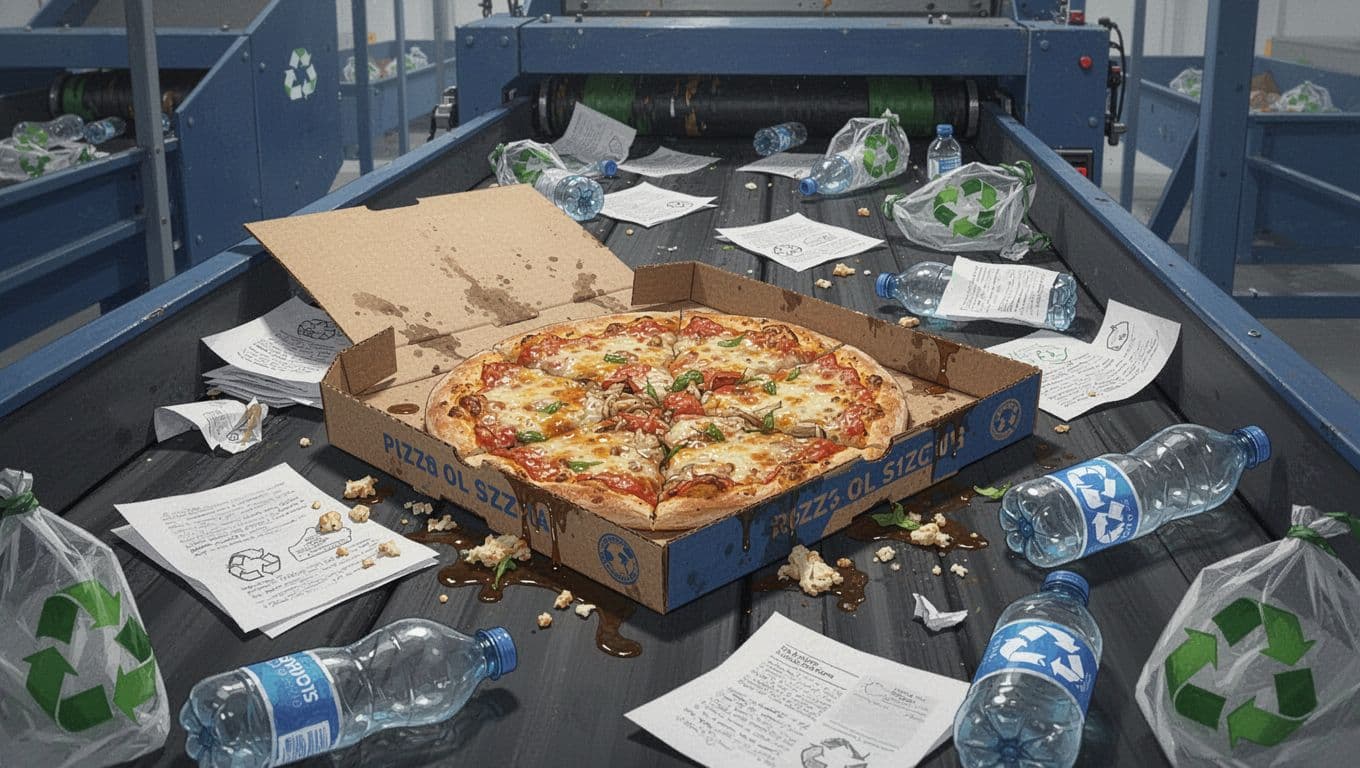
Contamination does two harmful things at once. First, it raises sorting costs. Second, it can make the “good” material too dirty to sell.
Here’s an everyday way to picture it: imagine your recycling load is a bucket of ingredients for soup. If one ingredient is rotten, the restaurant may toss the whole batch, not just the bad piece. Recycling works similarly, because a facility must protect quality standards for the next step.
The U.S. EPA explains the “current national picture” of materials management and shows how waste ends up in landfills, composting, combustion, and recycling. If you want a broad baseline for where waste goes, use EPA’s national facts and figures on materials and recycling.
Food Residue and Liquids: The Sneaky Saboteurs
Food residue and liquids are some of the most common contamination problems. A greasy pizza box may look like paper. But grease soaks in. That can make paper harder to process, and it can also attract pests while materials sit in storage.
Liquids create their own mess. A half-full bottle, a container with sticky leftovers, or a jar with sauce can leak. Then it soaks labels, cardboard, and other recyclables. After that, sorting becomes slower and more expensive.
Food waste matters here, too. In the U.S., a large share of wasted food still lands in landfills. One recent breakdown found about 59.8% of wasted food went to landfills in 2019, which is nearly 40 million tons. When food waste goes to landfill, you lose the chance to recover nutrients and materials.
The frustrating part is that many people try to “do the right thing,” but they still skip the cleanup step. They toss an item in the bin because it’s labeled “recyclable,” even though it’s still coated in food.
Cleaning tips can help, but they’re not magic. Rinsing reduces residue, yet some contamination still happens during transport. Still, you should rinse when you can, especially for containers. It’s a small change that improves the odds of your items staying useful.
Wrong Plastics and Bags That Jam Everything Up
Plastics are tougher than most people expect. Even when something is plastic, recycling depends on the type, shape, and local acceptance rules. Some plastics get recycled more often. Others end up in trash because processors cannot use them at scale.
In addition, plastic bags and film create problems in sorting. They tangle equipment. They wrap around machinery. Then workers must stop lines to clear jams.
That’s why “it’s all plastic” thinking can backfire. If your bin mixes plastic types, the whole load may lose value. Even if one brand-new bottle would be recyclable, the wrong item in the same stream can drag down the entire batch.
Plastic recycling rates reflect this reality. Recent reporting shows U.S. plastics recycling is around 5 to 6% for post-consumer plastic overall. That’s one reason your “maybe it’s recyclable” items often end up buried.
Finally, there’s a market side to this, too. In the past, many places relied on international exports. But export rules shifted, including limits based on contamination. The North Carolina DEQ describes how markets changed after China restricted imports of mixed recyclables, and why contamination thresholds became tighter. For context, see Recycling disruptions explained by NC DEQ.
Wishcycling: When Hope Trumps Reality in Our Bins
Wishcycling is what happens when you toss an item in the recycling bin “just in case.” It feels helpful. Yet it can make your local program less effective.
The logic is simple: if recycling is good, then more items must be better. Unfortunately, recycling systems need consistent material streams. When you add the wrong items, facilities may have to dump more than they would otherwise.
You can think of wishcycling like sweeping sand into a workshop. The goal is cleanliness, but the sand ruins tools. In recycling, the “tools” are sorters, screens, and presses. The sand is contamination.
Wishcycling also grows from uncertainty. Many cities do not accept the same items. Some accept cartons. Others do not. Some take plastic tubs, others skip them. If you’re not sure, you might guess.
The result is a bigger landfill problem. When bad items lower the quality of a batch, facilities may recover less material and send more to landfill instead.
This is also why education matters. If people understand local rules, contamination drops. If they don’t, wishcycling rises.
If you want a quick, plain-English guide to the idea, check What is wishcycling?. It’s useful for learning the pattern and breaking the habit.
Items People Wish They Could Recycle But Can’t
People often wish they could recycle items that are common in daily life. Then those items still end up in trash because the market does not support them locally.
Here are examples many people try to recycle, but rules often vary or reject them:
- Styrofoam foam (often too contaminated and too low value to process)
- Plastic bags and film (they tangle machinery)
- Diapers and pet waste (they are not clean, and contamination kills reuse)
- Clothing and textiles (some regions take them, but most bins do not)
- Small electronics (some programs accept them, but curbside bins usually don’t)
- Broken glass and ceramics (some places take glass only under strict limits)
If you want a reality-check list of household items that often do not belong in curbside recycling, see 20 things you should not recycle. Use it as a starting point, then confirm your local rules.
One practical mindset helps most people: recycling is not a “help the planet” guess. It’s a materials program with specific inputs. When you keep those inputs clean and correct, the system works better.
Economics and Infrastructure: The Hidden Barriers to Better Recycling
Even if people do everything right, recycling still faces hard barriers. Two big ones are economics and infrastructure.
First, landfill often wins on cost in the short term. Recent figures show tipping fees in the U.S. commonly fall around $60 to $80 per ton. Landfilling looks cheap because it’s simpler. Meanwhile, recycling needs sorting, cleaning, and buyers for the final material.
Second, recycling depends on local setup. Not every community has the same services. Some places lack enough processing capacity. Others do not offer curbside collection at all, so the best bins in the world still cannot help.
The result is uneven progress. One reason the national recycling rate moves slowly is that the system needs both education and infrastructure. Without them, contamination stays high and valuable material stays locked in trash.
Here’s a quick snapshot of how prices and costs can swing:
| Factor | What it can look like in the U.S. |
|---|---|
| Landfill tipping fees | Often $60 to $80 per ton |
| Recycled paper sales value | Can range around $20 to $47 per ton |
| Recycled aluminum sales value | Often over $1,000 per ton |
| Recycled PET plastic value | Often over $250 per ton |
Takeaway: recycling does better when markets can buy the material. It does worse when prices fall, or when contamination lowers quality.
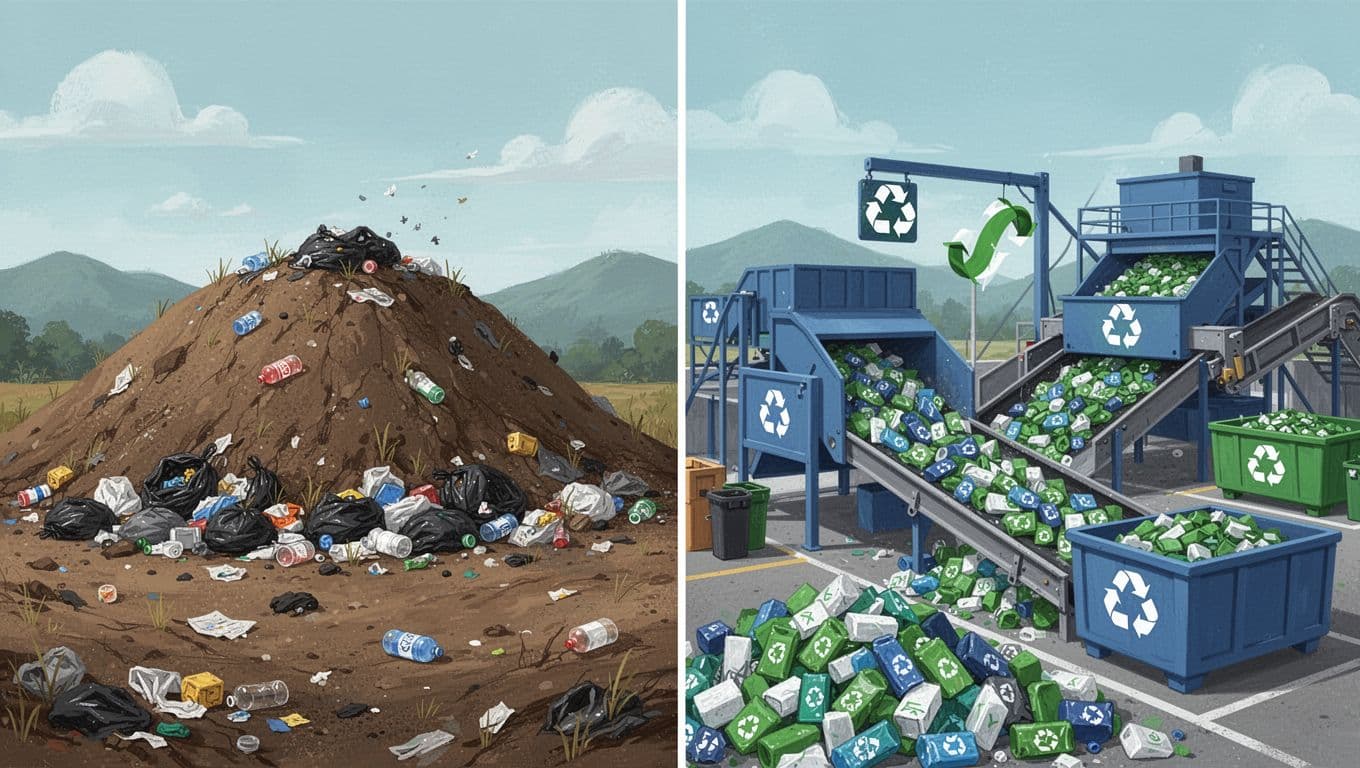
This is also why “recycling more” isn’t always the solution. If recycling costs rise because loads are dirty, officials may shift strategy. They may keep landfilling because it’s predictable.
Why Landfills Win on Cost in Many Places
Landfills feel like the easy option. You pay a tipping fee. The job gets done.
In contrast, recycling depends on quality and timing. Dirty or mixed loads require more labor. That extra work costs money. Also, commodity markets can drop. When buyers pay less, recycling revenue shrinks.
So the system makes a call based on what’s financially workable. That decision can still be better for the environment over time, but it’s harder for cities to justify when budgets get tight.
One more factor is cleanup and risk. Recycled material must meet standards. If it fails, it cannot be used. Then it ends up in disposal anyway. That turns a hopeful bin into landfill tonnage.
If you want to explore how disposal costs vary across states, see Landfill tipping fees by state. It shows why “cheaper landfill” can be real in many areas.
Access Gaps Leaving Communities Behind
Even great recycling education can’t help if people don’t have the service. In many parts of the U.S., access to drop-off sites and recycling programs is uneven.
That matters because curbside bins are where most wishcycling starts. If someone has a bin but not clear rules, they’ll guess. If they have no bin, they might throw items in trash because they lack a better option.
It also means plastics and hard-to-recycle materials often stay trapped in waste. Some items have no local outlet, so they default to landfill.
Access gaps also push more households into the same pattern. When people can’t find answers quickly, they rely on old habits, package labels, or social media advice. Those sources can conflict with local rules.
That’s why the best next step is simple. Check your local guidance before you toss. If your city has a “what goes where” page, bookmark it. Then you avoid the guesswork that creates contamination.
Everyday Items That Almost Always End Up Buried
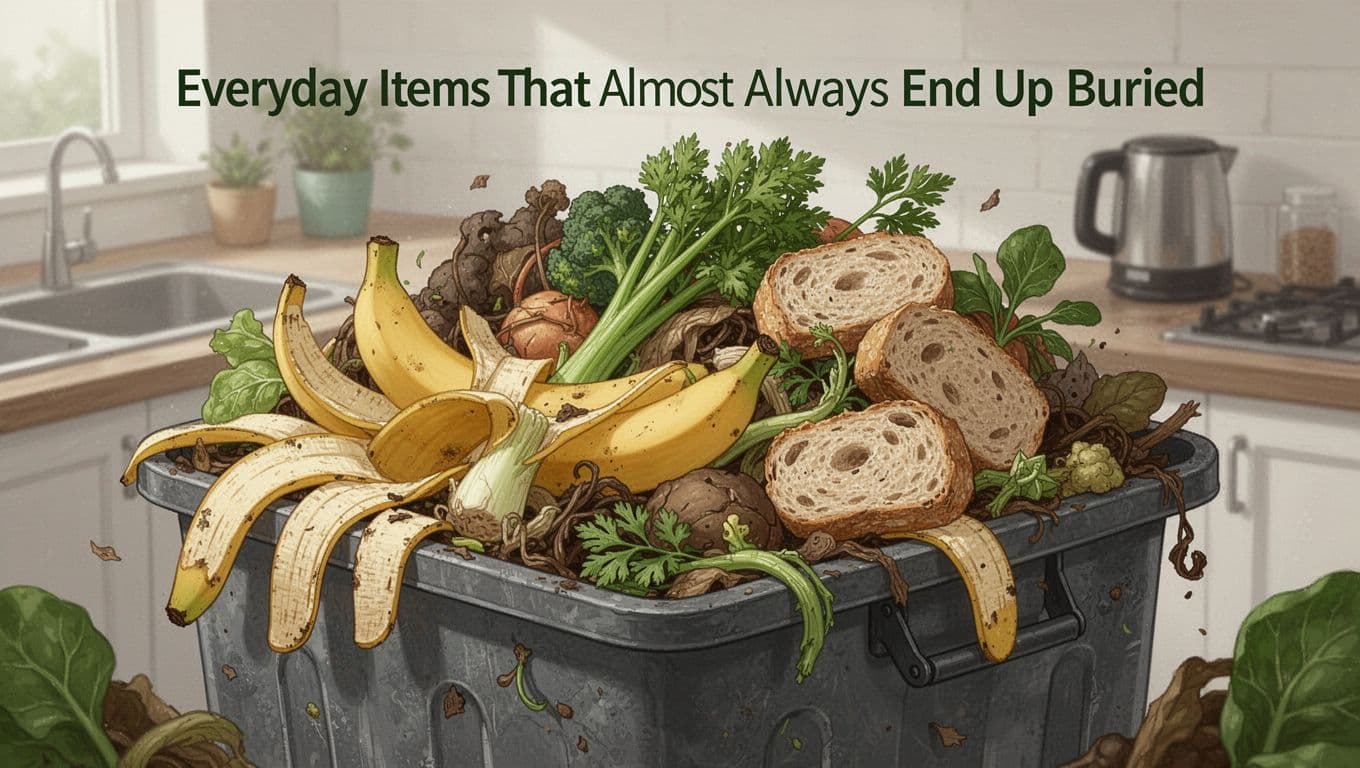
Some landfill drivers show up again and again. The biggest one is food waste.
Food waste is heavy and messy. It also breaks down in landfills. That creates strong odor and pollution concerns, plus it wastes valuable nutrients. When food scraps go to landfills, you miss the chance to compost them or use them for other recovery.
In one recent snapshot, food waste formed a large share of U.S. disposal. Around 30 to 40% of the food supply is wasted, and a major share ends up in landfill. In 2019, about 60% of food waste went to landfills, not composting.
Other item categories also show up in landfill loads. Many of them fail for simple reasons: they’re too contaminated, too hard to sort, or too low in value to recycle locally.
Common examples include:
- Soiled paper (greasy napkins and pizza boxes with heavy residue)
- Textiles (often not collected for reuse or recycling curbside)
- Mixed materials (like many “grab and go” packages)
- Single-use items without local take-back programs
The good news is that some of these are also the easiest to fix. Food scraps can go to compost if your area supports it. Clothing can go to donation or textile collection points. When you separate these items early, you reduce the pile that ends up in landfill.
Conclusion: Stop Guessing, Start Matching Your Bin to Your Local Program
Your “recycling bin” is not magic. It’s a supply line with strict needs. When items are dirty, wrong, or mixed, contamination and processing limits can push them into landfills.
Across the U.S., the pattern stays consistent: contamination turns good material into trash, wishcycling adds uncertainty, and economics and access shape what systems can do.
So start with a small habit shift. Confirm your local rules, rinse when you can, and compost food scraps if you have that option. Then ask one simple question next time: “Would my local facility accept this in my exact situation?”
When you stop guessing and start matching your items to your program, your effort has a higher chance to become real recycling instead of landfill cleanup.